
Author: admin

  • The Boundaries of Heaven and Earth: Reading Genesis 6 with Humility

    The Boundaries of Heaven and Earth: Reading Genesis 6 with Humility

    Genesis 6:1–4 is one of the Bible’s briefest and most debated passages. In only a few verses, it describes the “sons of God,” the “daughters of men,” and the Nephilim before turning toward the corruption that preceded the flood. The passage raises difficult questions about spiritual beings, human freedom, divine boundaries, judgment, and mercy.

    A responsible reading begins with humility. The text is ancient, compressed, and open to more than one interpretation. Yet its central concern is clear: creation has been disordered, sin has spread, and God responds while preserving a path of salvation.

    The setting before the flood

    The account appears after humanity’s expulsion from Eden and before the flood narrative. Genesis presents a world that is developing outwardly. Families multiply, cities emerge, and human creativity produces music and metalwork. Progress, however, does not mean moral health. Beneath the surface, the effects of rebellion continue to spread.

    Genesis 6 places the mysterious union between the sons of God and the daughters of men inside this wider decline. The story is not an isolated curiosity. It functions as part of the Bible’s explanation of why the earth became filled with corruption and violence.

    Who are the “sons of God”?

    Two major interpretations have shaped Jewish and Christian discussion.

    The older interpretation understands the sons of God as heavenly beings. The Hebrew expression benei elohim appears elsewhere in the Old Testament, especially in Job, where it refers to members of the heavenly assembly. On this reading, these beings crossed from the heavenly sphere into an unlawful union with human women.

    The second interpretation identifies the sons of God with the descendants of Seth and the daughters of men with the line of Cain. The passage would then describe the breakdown of a distinction between a faithful family and a rebellious one. This interpretation became especially influential in later Christian tradition.

    The second view highlights a genuine biblical warning: faithfulness can be weakened when people deliberately join themselves to patterns of life opposed to God. The first view, however, takes the Hebrew expression and the reference to the Nephilim in their most immediate sense. It also fits the later biblical references to angels who abandoned their appointed dwelling.

    The text does not explain every detail, so certainty should not be claimed where Scripture leaves questions open. Still, the heavenly-being interpretation has deep roots in early Jewish writings and in parts of the early church.

    What does the passage say about spiritual beings?

    One objection is that spiritual beings could not have a physical presence. Yet biblical narratives portray heavenly messengers appearing in tangible form. In Genesis 18, visitors eat with Abraham. In Genesis 19, the angels who arrive in Sodom are perceived as physically present by the city’s inhabitants.

    These scenes do not give us a biological explanation for Genesis 6, and the Bible does not provide one. They do show that the biblical writers did not imagine every spiritual manifestation as an invisible idea. Heavenly beings could appear in a form perceptible to human beings.

    The important point is not speculation about mechanics. It is the moral direction of the act. The beings in Genesis 6 are portrayed as taking what they desired rather than fulfilling a mission from God. Their descent represents an unauthorized crossing of a boundary within the created order.

    The Nephilim and the seriousness of the transgression

    The union is associated with the Nephilim, described as mighty figures and men of renown. Their appearance creates a striking relationship between the offense and its consequences. The passage is not merely concerned with an ordinary marriage between two human families. Something extraordinary has occurred, and the result contributes to the disorder of the world.

    The Nephilim are mentioned again in Numbers 13, where the spies speak of giant-like people in Canaan. That later reference does not resolve every question about their origin, but it shows that the image remained part of Israel’s memory. Genesis 6 therefore introduces a shadow that echoes through the larger biblical story.

    How the New Testament frames the episode

    Two short New Testament passages are often connected with Genesis 6. Jude speaks of angels who did not keep their proper position but abandoned their dwelling. Second Peter says that God did not spare angels who sinned, but committed them to confinement awaiting judgment.

    These passages are not detailed commentaries on every phrase in Genesis 6. They do, however, support the idea that an ancient tradition understood the event as a rebellion by heavenly beings. At the same time, Matthew 22:30 says that in the resurrection people will be like the angels in heaven and will not marry. Some readers see this as evidence that angels do not marry by nature.

    The two ideas need not be treated as a contradiction. Matthew describes the normal, ordered condition of angels in heaven. Jude and Second Peter describe beings who rebelled against their proper place. The text invites careful comparison rather than a forced certainty.

    Why did judgment reach the whole earth?

    Genesis does not present the flood as a reaction to one isolated act. The following verses describe the earth as corrupt and humanity as filled with violence. The thoughts of the human heart are portrayed as continually inclined toward evil. The crisis has become comprehensive.

    This is why the flood should not be reduced to a simple punishment for one strange event. The transgression is part of a larger collapse in which boundaries disappear, violence becomes normal, and corruption spreads through society. God’s judgment addresses a world whose disorder has become pervasive.

    That judgment is severe, and the passage should not be softened. Yet it is also not portrayed as impulsive. Genesis 6:3 mentions a period of 120 years before the flood. The delay reveals patience and an opportunity for repentance. Judgment comes after extended warning, not as a capricious outburst.

    Noah, integrity, and the open door of mercy

    Against the darkness, Genesis says that Noah found favor with God. Noah is called righteous, blameless in his generation, and one who walked with God. The Hebrew word often translated “blameless” or “perfect” is tamim. In the Old Testament, it can describe an animal without blemish or a person marked by integrity.

    Some popular explanations claim that Noah was genetically untouched by the corruption around him. The passage itself does not clearly establish that idea, and it is wiser not to build certainty on speculation. Its emphasis is moral and spiritual: Noah remained faithful in a generation that had lost its way.

    The ark therefore represents more than survival from a natural disaster. It is the means by which God preserves Noah’s family and the continuation of his promise. Noah does not receive a full explanation of every mystery. He receives instructions, and he obeys them.

    Genesis emphasizes that Noah did everything God commanded. His faith is practical, patient, and costly. He builds while others mock, continues while the world ignores the warning, and trusts before he can see the outcome. When the time comes, God himself shuts the door of the ark, an image of both judgment and personal care.

    The warning for ordinary life

    The story’s relevance is not limited to questions about angels and giants. It also examines how corruption grows. People rarely arrive at ruin through one dramatic decision. More often, a small compromise is defended, a harmful habit is normalized, and a boundary is crossed repeatedly until the original warning is barely remembered.

    That pattern can appear in relationships, speech, resentment, pride, dishonesty, anxiety, or the refusal to forgive. A crack may look insignificant when it first appears, but neglect allows it to weaken the structure around it. Genesis 6 calls readers to notice the direction of their lives before small concessions become a settled way of living.

    This warning should not be used to produce despair. The same chapter that describes corruption also describes patience, favor, and preservation. God sees the damage, but he also provides a way through it. The story holds judgment and mercy together.

    The contrast between rebellion and self-giving love

    Christian interpretation sees a further contrast between the rebellion described in Genesis 6 and the mission of Jesus Christ. The beings in the earlier account descend to take what they were not given. Jesus descends from heaven not to seize, dominate, or satisfy a selfish desire, but to give himself.

    He enters human life, bears the weight of sin, and carries it to the cross. Where rebellion takes, Christ gives. Where corruption spreads death, Christ offers forgiveness and life. This connection is not a claim that every detail of Genesis 6 is explained by one later passage. It is a theological pattern: God’s answer to human and spiritual rebellion is ultimately not abandonment, but a gracious path of redemption.

    First Peter 3 connects Noah’s deliverance through water with Christian baptism. The comparison presents the flood not only as an account of destruction, but also as a sign pointing toward rescue. God’s mercy creates an ark, a refuge, and an invitation. People must still respond, but the way of salvation is provided.

    A mystery that calls for faithfulness

    Genesis 6 does not answer every question modern readers may ask. It does not describe the mechanics of the union, settle every debate about the Nephilim, or remove the tension between judgment and mercy. It does something more searching: it asks what happens when created beings reject the place God has given them and when a society allows corruption to become ordinary.

    The passage also points toward hope. Noah’s faithfulness shows that integrity is possible even in a damaged culture. God’s patience shows that judgment is not hasty. The ark shows that mercy is not absent. And the Christian reading of the story sees its fullest hope in Christ, who gives himself to restore what sin has broken.

    The lasting question is therefore personal. What boundary have you begun to treat as unimportant? What habit, resentment, relationship, or fear needs to be brought honestly before God? The answer need not begin with panic or self-condemnation. It can begin with repentance, trust, and the next faithful act.

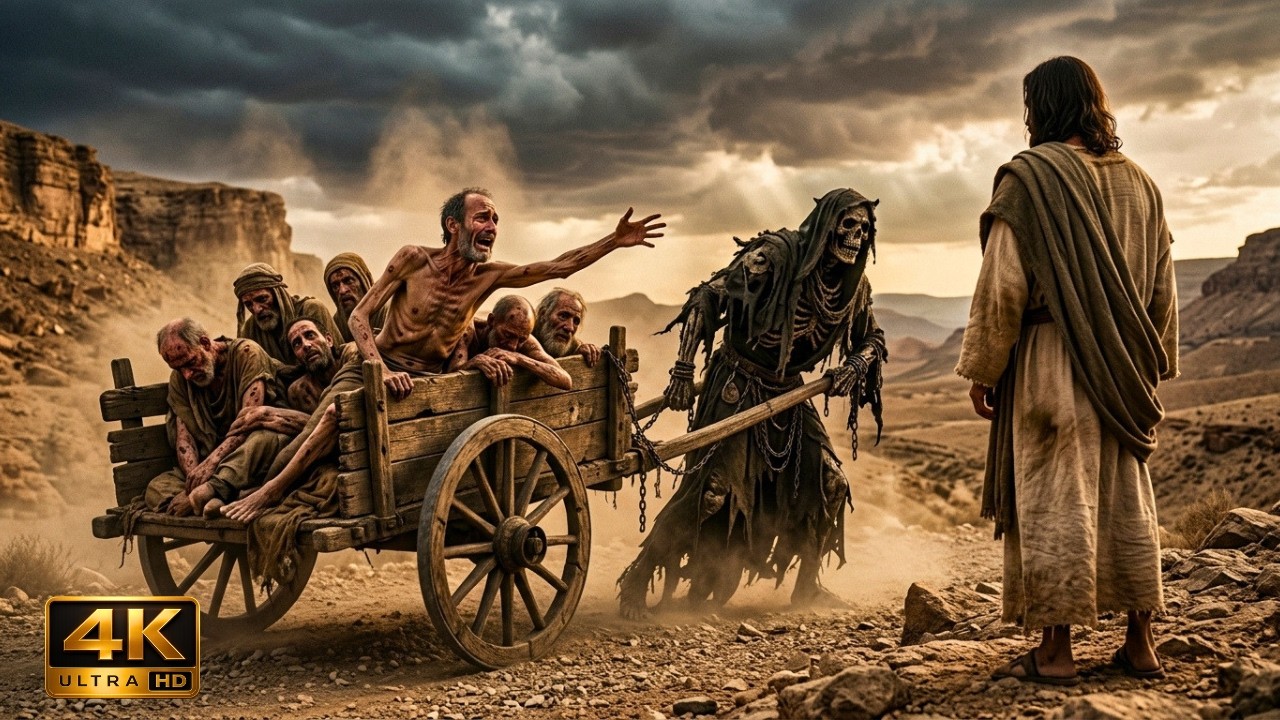
  • The Difference Between Angelic Rebellion and Human Redemption

    The Difference Between Angelic Rebellion and Human Redemption

    The question of why fallen humanity can be forgiven while fallen angels face judgment reaches into the heart of Christian theology. It is not merely a question about heavenly beings. It also reveals what Scripture says about knowledge, freedom, representation, mercy, and the astonishing value God places on human redemption.

    The Bible does not present angels as sentimental ornaments or harmless figures floating above the world. They are powerful servants of God, portrayed as messengers, guardians, worshipers, and agents of judgment. Their rebellion, therefore, was not a minor lapse by weak creatures struggling to understand right and wrong. It was a revolt by beings who possessed a kind of knowledge and proximity to divine glory that human beings have never experienced in ordinary life.

    A Rebellion Made in Full Awareness

    Several biblical passages are commonly understood as pointing to a primordial rebellion in the spiritual realm. Revelation 12 describes a dragon whose tail sweeps away a third of the stars of heaven, an image many interpreters connect with the rebellion of Satan and the angels who followed him. The imagery is apocalyptic and symbolic, so it should be handled carefully. Yet the broader biblical witness is clear that some angels abandoned their proper position and now await judgment.

    The crucial distinction is the condition in which that choice was made. Human beings live by faith, partial understanding, and limited perception. Paul describes our present knowledge as seeing “through a glass, darkly.” We encounter God through Scripture, conscience, creation, and the work of the Spirit, but we do not ordinarily stand before the unveiled glory of God.

    The biblical picture of rebellious angels is different. They belonged to the spiritual order and knew the reality of God directly. Their decision was not made under the same conditions of uncertainty, deception, and weakness that characterize human temptation. Their rebellion was a conscious rejection of a truth they knew rather than a confused stumble toward something they did not understand.

    This does not make human sin unimportant. Sin destroys, enslaves, and separates. But there is a meaningful difference between falling amid limitation and deception and rejecting the truth with complete awareness. Christian theology has often argued that a will fixed against God under such conditions becomes definitive. The issue is not that God lacks the power or desire to forgive. Rather, the rebellious will has decisively declared what it wants.

    Humanity’s Fall Was Corporate

    Another key difference concerns the way human beings are connected to one another. Scripture presents Adam not simply as a private individual but as the representative head of humanity. His disobedience affected the human family as a whole. In theological language, this is often called federal or representative headship.

    That doctrine can initially sound unfair. Why should people bear the consequences of a decision they did not personally make in the garden? Yet the same representative structure that explains humanity’s solidarity in the fall also makes corporate redemption possible. If humanity can be represented in condemnation, humanity can also be represented in righteousness.

    Paul develops this parallel in Romans 5. Adam’s disobedience brought condemnation, while Christ’s obedience opens the way to justification and life. Jesus is presented as the “last Adam,” the representative through whom a new humanity can be formed. The logic of redemption is therefore not an unrelated rescue operation. It answers the structure of the fall itself.

    Why Angels Are Not Described as One Fallen Race

    Angels are not presented in Scripture as a biological race descended from a single ancestor. They do not marry or reproduce in the human sense. Each angel is understood in Christian theology as a direct and individual creation of God rather than one member of a generational family that shares a common human lineage.

    This matters legally and theologically. Humanity fell as a connected family represented by one head. The angels who rebelled are described as individuals who chose their course personally. They did not inherit a sinful condition from a common ancestor, and they did not bring an innocent angelic generation into the consequences of their decision.

    Jude 6 speaks of angels who did not keep their proper position and are kept in eternal chains for judgment. The passage does not describe a future angelic redeemer or a plan of salvation for fallen spirits. Hebrews 2:16 likewise says that Christ helps the offspring of Abraham rather than angels. The contrast is brief, but it is profound: the incarnation is directed toward human beings.

    The Mystery of the Incarnation

    Christianity teaches that the eternal Son did not take the nature of an angel to rescue angels. He took human flesh. He entered the conditions of human life: hunger, weariness, grief, rejection, pain, and death. He became fully human while remaining fully divine, joining himself to the very race that had fallen.

    This is more than a demonstration of power. It is an act of identification. Christ did not save humanity from a safe distance. He entered our history and carried human suffering from the inside. The manger, the wilderness, the tears at Lazarus’s tomb, the cross, and the resurrection all belong to the same movement: God’s personal commitment to restore human beings.

    Hebrews 2:16 places the emphasis clearly: God’s saving help is given to the descendants of Abraham. The passage does not suggest that angels are less impressive, less powerful, or less valuable as created beings. It reveals that God chose a particular redemptive purpose for humanity, one that includes incarnation, adoption, suffering, and glorification.

    Angels Look Into the Work of Grace

    First Peter 1:12 says that angels long to look into the realities associated with salvation. The image is one of intense attention and wonder. Angels understand holiness and power. They serve in God’s presence and witness his judgments. But redeemed human beings know something from the inside that unfallen angels have never experienced: the movement from guilt to forgiveness.

    A person who has confronted personal failure, confessed it, and received mercy possesses an experiential knowledge of grace. That does not make sin good, nor does it make the consequences of sin unreal. It means that God’s mercy becomes more than an abstract doctrine. It becomes a lived reality.

    Redemption displays an aspect of God’s character that creation would not otherwise see in the same way. God does not merely preserve what is unbroken. He restores what has been shattered. He does not simply maintain innocence; he brings sinners through repentance, forgiveness, transformation, and adoption.

    Servants and Heirs

    Hebrews 1:14 describes angels as ministering spirits sent to serve those who will inherit salvation. The passage gives human beings a surprising identity. Angels are powerful servants of God, but redeemed people are described as heirs.

    In the ancient world, the difference between a servant and an heir was not a matter of degree. A servant could be trusted, honored, and highly capable without receiving the legal status of a child. An heir possessed rights because of relationship. In Romans 8, Paul uses the language of adoption to describe what God gives those who belong to Christ. They are not tolerated outsiders or second-class members of the household. They receive the status of children and heirs.

    This status is not earned by human strength. It is the gift of grace. The redeemed do not outrank angels because they are naturally wiser, stronger, or more faithful. They are raised because they are united to Christ, the Son. Their future is determined by their relationship to him rather than by their natural abilities.

    What Does It Mean to Judge Angels?

    Paul asks in 1 Corinthians 6:3, “Do you not know that we are to judge angels?” The statement is startling. How could people formed from dust ever occupy a position of judgment over spiritual beings?

    The answer is not human superiority. It is the result of redemption. Unfallen angels possess holiness without having passed through the history of human sin and restoration. Redeemed people know both the devastation of rebellion and the transforming power of mercy. They have been brought from condemnation to reconciliation through the costly work of Christ.

    In this sense, redeemed humanity becomes a living testimony. Every restored sinner bears witness that God’s grace can reach farther than the fall. The scars of the past do not have the final word. In Christ, they become part of a story of rescue and transformation.

    The Value Revealed by the Cost

    Human worth is often measured by performance, age, social status, productivity, or the approval of other people. The biblical account gives a different measure: the cost God was willing to pay.

    God did not send an ordinary messenger to accomplish human redemption. He gave the Son. The cross therefore reveals both the seriousness of sin and the depth of divine love. Human beings are not valuable because they have avoided every failure. They are valuable because God chose to pursue them at the highest possible cost.

    That truth speaks directly to people who feel disqualified by their past. Shame says that failure has become identity. Grace says that failure can be confessed, forgiven, and transformed. Shame says that God has more important concerns. The gospel says that God’s redemptive purpose is personal and deliberate.

    A Hope Larger Than Failure

    The contrast between angels and humanity ultimately leads back to a practical question: What should a person do with the mercy being offered?

    The answer is not to treat grace casually. Forgiveness is not permission to remain unchanged. It is an invitation to repentance, trust, and a new life. The person who has received mercy is called to extend mercy, pursue holiness, and live as a child of God rather than as a prisoner of former guilt.

    Christian theology sees human redemption as one of the great mysteries of the universe. Angels are powerful, intelligent, and close to the throne of God, yet the redeemed are adopted into God’s family through Christ. They are not saved because they are impressive. They are saved because God is merciful.

    The final message is therefore one of grounded hope. Your failures matter, but they do not have to define you. Your limitations are real, but they do not cancel God’s purpose. The cross declares that forgiveness is not a vague wish. It is a costly and accomplished work offered to people who turn toward God.

    The mystery of angelic judgment ultimately magnifies the wonder of human grace. It shows that redemption is not something humanity could demand. It is a gift that reveals the depth of God’s love, the seriousness of his holiness, and the astonishing future prepared for those who belong to Christ.

  • The Miracle That Happened on the Way

    The Miracle That Happened on the Way

    There are moments when suffering does more than weaken the body. It can separate a person from family, work, worship, and even a sense of identity. In the ancient world, a diagnosis of leprosy could mean exile from ordinary life. The sick person was required to live outside the community, warn others to keep their distance, and carry a public label that overshadowed every other part of who they were.

    Against that background, the account of ten lepers meeting Jesus becomes more than a story about physical healing. It is a story about people who had been pushed to the margins, a command that demanded faith before visible evidence, and a return that revealed the difference between receiving a gift and recognizing its giver.

    When illness becomes isolation

    The regulations described in Leviticus were intended to protect the community from disease, but for those who received the diagnosis, the consequences were devastating. A man could be a father, farmer, merchant, husband, or neighbor one day and an outcast the next. He could no longer share meals with his children, embrace his wife, enter the place of worship, or move freely through the town.

    The pain was therefore not only physical. It was social and spiritual as well. The person was treated as though he were already dead, still breathing but unable to participate in the life of the living. Every approaching traveler could become a reminder of rejection. Every public warning could feel like an announcement that the sufferer no longer belonged anywhere.

    Yet the ten men described in Luke’s Gospel were not entirely alone. Their shared misery created an unlikely community. Jews and Samaritans, groups normally divided by deep religious and cultural hostility, found themselves living side by side because illness had placed them in the same forgotten space. Suffering did not erase their history, but it made their common need more important than their old divisions.

    A cry for mercy from a distance

    When Jesus passed near the village on the road to Jerusalem, the ten men did not approach him closely. The rules of their condition required them to remain at a distance. From there, they raised their voices together: “Jesus, Master, have mercy on us.”

    The wording matters. They did not demand healing as though they were entitled to it. They appealed to mercy. Their cry came from helplessness, but it also carried hope. They had heard that Jesus could do what physicians and ordinary remedies could not do, and they chose to direct their last strength toward him.

    That prayer remains recognizable. People still cry for mercy when illness, debt, grief, loneliness, or a broken relationship has left them with no clear path forward. Sometimes faith begins not with confidence or eloquence, but with the willingness to call out from a place of need.

    The command that required a step of faith

    Jesus did not heal the men in the way they might have expected. He did not immediately touch them or announce that their disease had disappeared. Instead, he told them to go and show themselves to the priests.

    According to the law, the priest was the one who examined a person and confirmed that healing had taken place. Only then could the former sufferer return to the community. The instruction therefore sounded almost impossible. The men were still visibly sick when Jesus spoke. Their bodies still carried the evidence of their condition, yet they were told to begin the journey that normally came after healing.

    This made obedience itself an act of faith. They had to move before they could see proof. They had to trust the word they had received while their circumstances still appeared unchanged. The miracle came as they went—not before the journey began, and not after they had reached their destination.

    That detail gives the account enduring power. Many people wait for certainty before taking a necessary step. They want every fear resolved and every result guaranteed. But faith often means moving forward with the light that is available, trusting that transformation may become visible along the way.

    Healing on the road

    As the ten men walked, their bodies were restored. Sensation returned to damaged limbs. Diseased skin became healthy. What had seemed to be an irreversible decline was suddenly replaced by new life.

    Imagine what that moment meant. They could think about returning home, seeing their families, sharing a meal, sleeping in a real bed, and entering the worshiping community again. Years of loss appeared to be opening into a future. Their healing was not a small improvement; it meant the recovery of human contact, dignity, and belonging.

    All ten received the same physical gift. But the story does not end with the healing.

    The one who turned back

    One of the ten, a Samaritan, returned to Jesus. He glorified God loudly, fell at Jesus’ feet, and gave thanks. The man who had once been required to announce his uncleanness now used his voice to announce mercy. The person who had been forced to remain far away now came near in worship.

    Jesus then asked, “Were not ten cleansed? Where are the nine?” The question was not a demand for praise. It exposed a deeper human tendency: to seek help in desperation and then rush onward once the crisis has passed.

    The other nine were not condemned for wanting to return to their families. Their desire was understandable. They had lost years of ordinary life and were eager to reclaim it. But the Samaritan recognized that the healing was not merely an escape from disease. It was an invitation into a relationship with the one who had shown mercy.

    He understood that the gift was not the end of the story. It was the beginning of a new life shaped by gratitude.

    Gratitude turns a gift into transformation

    It is easy to remember God while waiting for an answer and forget him once the answer arrives. A person may pray intensely during a health crisis, financial emergency, or family conflict, then gradually treat the restored situation as though it were guaranteed all along.

    The Samaritan’s return challenges that pattern. Gratitude is more than a private feeling. It is a deliberate act of recognition. It says that help was received, that mercy was not deserved, and that the giver matters as much as the gift.

    Physical healing changed the lives of all ten men, but returning to Jesus changed the meaning of the healing for the one who came back. He did not merely receive a better body; he gained a clearer vision of grace. The story suggests that the deepest miracle is not only to be rescued from a visible problem, but to have the heart awakened to the source of rescue.

    A lesson for people still waiting

    The account also speaks to those who have not yet seen the answer they are seeking. The ten men had to walk while the evidence of their illness remained. Their obedience did not mean that their pain was imaginary. It meant that they refused to let present circumstances have the final word.

    Moving forward in faith is not a promise that every desired outcome will occur on our preferred schedule. It is an invitation to continue with courage, to seek support rather than endure hardship in isolation, and to trust God one step at a time. Sometimes the change becomes visible only after the journey has begun.

    Mercy that crosses boundaries

    The presence of a Samaritan among the ten adds another important layer to the story. The person regarded as an outsider was the one who returned with open gratitude. Mercy did not follow the social boundaries people had constructed. Jesus responded to suffering before asking where each man came from, and the grateful stranger found a place at his feet.

    No past, label, nationality, or social judgment places a person beyond compassion. The story invites us to question the categories by which we decide who is worthy of attention. It also asks whether our own gratitude is limited by habit, pride, or religious familiarity.

    Where do we stand?

    Every reader can find a reflection of life in this encounter. We may be calling for mercy from a distance, walking forward without visible proof, celebrating an answer, or realizing that we have forgotten to turn back and give thanks.

    A useful practice is to pause and remember the situations that once seemed impossible: an illness that improved, a relationship that was restored, provision that arrived at the right time, or strength that appeared when our own reserves were gone. Gratitude does not deny the difficulty that came before. It keeps us from forgetting the mercy that carried us through it.

    The ten men were healed on the road, but the returning Samaritan discovered something more. He learned that restoration is not complete when the crisis ends. It reaches its fullest meaning when the heart recognizes grace, draws near, and responds with worship.

    When life finally begins to open again, may we remember to turn back.

  • When Hope Seems Too Late: What the Raising of Lazarus Reveals About God

    When Hope Seems Too Late: What the Raising of Lazarus Reveals About God

    There are moments when a situation feels finished—not merely difficult, but sealed shut. A relationship has been silent for years. A diagnosis has changed the future. A dream has collapsed under circumstances that cannot be reversed. In those moments, the deepest pain is often intensified by the feeling that help should have come sooner.

    The account of Lazarus in John 11 speaks directly to that experience. It is a story of love, grief, delay, faith, and a power that reaches beyond the limits people assume are absolute. It does not dismiss sorrow or pretend that loss is easy. Instead, it shows how Jesus enters human pain and reveals that what appears to be the end may still be held within God’s purposes.

    A Family Jesus Loved

    Lazarus lived in Bethany with his sisters, Martha and Mary. Their home was a place where Jesus was welcomed not only as a teacher and miracle worker, but also as a beloved friend. The relationship was personal and affectionate. When Lazarus became seriously ill, the sisters sent a brief message: “Lord, the one you love is sick.”

    They did not need to explain everything. Their message rested on the confidence that Jesus cared and would understand the urgency. Yet the response was not what they expected. Jesus did not immediately leave for Bethany. He remained where he was for two more days.

    That delay is one of the most difficult parts of the account. Jesus knew Lazarus was sick. He had the authority to heal him. He also loved the family. Still, he did not arrive before Lazarus died. From Martha and Mary’s perspective, the silence must have felt like abandonment. Their prayers were urgent, the need was obvious, and the person who could help seemed absent.

    When God Does Not Arrive on Our Schedule

    Many people know the ache of waiting for an answer that does not come in time. We may believe that God can intervene, yet struggle when the intervention does not happen according to our timetable. The unanswered question becomes personal: If God cares, why did he allow this to happen?

    The story of Lazarus does not offer a shallow answer. The grief was real. The death was real. The sisters’ confusion was real. Jesus did not rebuke them for feeling pain or for wondering why he had not come sooner. Their honest words became part of their encounter with him.

    Jesus said that the illness would ultimately reveal God’s glory, but this did not mean the suffering was insignificant. It meant that the visible circumstances did not tell the whole story. The delay was not proof of indifference. It was part of a purpose the sisters could not yet see.

    This does not mean every loss will be reversed in the way we hope. It does mean that delay should not automatically be interpreted as rejection. Silence is painful, but it is not always evidence that love has disappeared.

    Faith That Can Speak Honestly

    When Martha heard that Jesus had arrived, she went out to meet him. Her first words were direct: “Lord, if you had been here, my brother would not have died.” The statement carried both faith and accusation. She believed Jesus had the power to prevent the death, and she could not understand why he had not used it.

    Many people have prayed similar words without saying them aloud. If help had come earlier, the marriage might have survived. If healing had come sooner, a loved one might still be alive. If the opportunity had arrived at the right moment, the future might look completely different.

    Martha’s faith was wounded, but it was not gone. Even as she grieved, she continued speaking to Jesus. That matters. Biblical faith is not always calm certainty. Sometimes it is the decision to bring confusion, disappointment, and sorrow into God’s presence instead of turning away completely.

    Jesus answered Martha with a declaration that reaches beyond the immediate crisis: “I am the resurrection and the life.” He did not merely promise an event in the distant future. He presented himself as the source of life and the answer to death’s finality. The question was not whether Martha understood every detail. It was whether she could trust the person standing before her.

    Jesus Wept

    Mary later came to Jesus and repeated the same words her sister had spoken. She fell at his feet, and the people around her wept. The scene was filled with public grief, the kind of sorrow that cannot be hidden or neatly managed.

    Then Jesus wept.

    These two words reveal something essential about his character. Jesus already knew what he was about to do. He knew that Lazarus would soon come out of the tomb. Yet he did not stand at a distance from the family’s pain as though the coming miracle made their tears unimportant. He entered their grief.

    Jesus’ tears show that divine power is not cold or detached. God does not need to be informed about the outcome before he can care about the suffering along the way. Compassion is not weakened by hope. The knowledge that death will ultimately be defeated does not make today’s mourning unreal.

    For anyone carrying grief, this is a powerful comfort. The presence of sorrow does not mean faith has failed. Tears do not disqualify a person from trusting God. Jesus himself stood beside a tomb and wept with those who were hurting.

    The Stone and the Smell of Death

    Jesus went to the tomb and instructed the people to remove the stone. Martha objected that Lazarus had been dead for four days. Her concern was practical and understandable. The body was not merely believed to be dead; the evidence was undeniable.

    The detail matters because the miracle did not occur in a vague or uncertain situation. Lazarus was not simply unconscious. He was not recovering from a severe illness. The tomb represented a condition that human beings could not repair.

    Before the stone was moved, Jesus reminded Martha that belief would allow her to see God’s glory. He was not asking her to deny what was in front of her. He was asking her not to assume that what she could see was the limit of what God could do.

    We all have stones in front of us. Some are made of shame, resentment, fear, regret, or years of disappointment. Others are connected to circumstances that truly cannot be changed by human effort. Faith does not require pretending that the stone is small. It invites us to believe that the stone is not stronger than God.

    “Lazarus, Come Out”

    After praying, Jesus called Lazarus by name: “Come out.” The command was simple, but it carried the authority of the giver of life. Lazarus emerged from the tomb still wrapped in burial cloths, and the people were told to release him.

    The scene presents both divine action and human participation. Jesus did what no person could do: he restored life. Then he instructed the community to do what they could do: remove the bindings and help Lazarus walk freely.

    This pattern remains meaningful. There are transformations that only God can accomplish, but restored people often need the care of others as they learn to live in their new freedom. A person may receive forgiveness and still struggle with shame. Someone may find renewed hope and still be bound by fear. A survivor may be alive and moving forward while carrying wounds that require patient support.

    “Release him” is a call to compassionate community. It asks us to become the hands, patience, encouragement, and practical help through which another person can recover strength. We should not demand that people instantly appear untouched simply because they have found hope. Freedom often involves a process of being unwrapped.

    Finding Hope in Personal Tombs

    The story of Lazarus invites honest reflection about the places in our own lives that feel closed. Perhaps a family relationship has been buried beneath years of silence. Perhaps financial pressure has convinced you that no future is possible. Perhaps a personal dream has died, or grief has made the world feel unfamiliar.

    Hope does not mean promising that every circumstance will unfold exactly as we wish. It means refusing to believe that pain has the final authority over our lives. Sometimes restoration comes through an unexpected opportunity, a changed heart, wise counsel, medical care, reconciliation, or the strength to endure a difficult season. Sometimes the miracle is not immediate circumstances changing, but the arrival of peace and courage in the middle of them.

    The account also encourages action. Martha and Mary brought their need to Jesus. The stone had to be moved. Lazarus had to come out. The community had to help remove the burial cloths. Trust does not eliminate every practical step. It can give us the courage to take the next faithful one.

    If you are facing serious emotional or physical suffering, spiritual hope should be accompanied by appropriate help. Speaking with a doctor, counselor, pastor, or trusted support person is not a failure of faith. Care and professional treatment can be part of God’s provision.

    The Question That Remains

    At the center of the story is a question: Do you believe this? It is not a demand for perfect confidence or an invitation to ignore reality. Martha acknowledged the death in front of her. Faith did not require her to call the tomb something else.

    The question asks whether we believe that God’s power and presence extend beyond what our circumstances can explain. It asks whether we can keep the door open to hope even when we cannot see how renewal could happen.

    There may be situations in your life that feel four days old—too far gone, too painful, or too permanently sealed. Bring them honestly before God. Bring the disappointment as well as the longing. Bring the faith you have, even if it feels small. The God who meets people at the tomb is not frightened by grief, delayed answers, or impossible conditions.

    In the presence of Jesus, the grave is not ignored, but it is no longer the final word. He weeps with those who mourn, speaks life where hope has disappeared, and calls his people to help one another walk into freedom. Even when the stone remains in view, there is reason to believe that God is still at work.

  • The Anatomy of Heavenly Rebellion: Pride, Freedom, and the Mystery of Evil

    The Anatomy of Heavenly Rebellion: Pride, Freedom, and the Mystery of Evil

    Few questions in theology are as unsettling as this one: how could rebellion begin in a world that had no hunger, pain, death, or ignorance? The biblical account does not give us a complete chronology of the unseen realm, but it provides a series of striking images. Taken together, they portray a heavenly society marked by order and beauty, a guardian who became consumed by self-regard, and a conflict whose deepest echo can still be heard in the human heart.

    A Spiritual Society Before the Human Story

    The book of Job describes a time when the foundations of the earth had not yet been laid and “the morning stars sang together” while the heavenly beings shouted for joy. The detail is brief, but its implications are profound. Before human history began, Scripture presents an organized, conscious spiritual community capable of worship, responsibility, and collective joy.

    Paul adds another dimension in his letter to the Colossians, where he speaks of thrones, dominions, rulers, and authorities—things visible and invisible—created through Christ. This language suggests that the heavenly realm is not an undifferentiated mass of spirits. It has ranks, functions, and relationships.

    Daniel’s account of the “prince of Persia” and the intervention of Michael offers a similarly mysterious glimpse. Spiritual powers appear connected with earthly kingdoms, operating in a dimension largely hidden from ordinary human perception. The Bible therefore gives us enough information to see structure, but not enough to satisfy every curiosity.

    The Guardian Who Turned Inward

    Ezekiel 28 is addressed directly to the king of Tyre, a ruler whose wealth and commercial power had produced extraordinary arrogance. Tyre was a major Phoenician trading center, famous for maritime commerce, luxury goods, and the costly purple dye made from sea mollusks. Its king had become so self-important that he imagined himself divine, enthroned in the midst of the seas.

    Yet the language of the oracle rises beyond an ordinary human monarch. The figure is described as being in Eden, walking among fiery stones on God’s holy mountain, and serving as an anointed guardian cherub. For many Jewish and Christian interpreters, this suggests a double layer of meaning: the earthly king is the visible expression of a deeper spiritual pattern.

    The portrait is one of astonishing privilege. The being is called a model of perfection and is surrounded by precious stones. A textual difference between the Masoretic Hebrew tradition and the ancient Greek Septuagint has also drawn attention. The Hebrew version lists nine stones, while the Septuagint includes twelve, corresponding to the stones on Israel’s high priestly breastplate. This does not prove a particular interpretation, but it has led some scholars to see a priestly or representative dimension in the figure.

    Ezekiel also uses unusual terms traditionally associated with musical instruments. The imagery has inspired the idea that this guardian was closely connected with heavenly worship—not merely participating in praise, but embodying the splendor and music of the celestial court.

    That is what makes the fall so tragic. The one appointed to guard divine holiness began to desire the glory he was meant to reflect. The gift became a source of self-admiration, and the mirror turned away from God and toward the self.

    How Pride Corrupts Wisdom

    Ezekiel 28 says that the being was perfect until wickedness was found in him. The wording matters. Evil is not presented as something created by God and implanted in a creature. It is discovered within the exercise of freedom. The possibility of rebellion arises not from a defect in the Creator’s work, but from the creature’s misuse of a genuine capacity to choose.

    The passage then describes a sequence: beauty produces pride, and pride corrupts wisdom. Beauty is originally a gift, a reflection of divine glory. But when the gift is treated as an independent possession rather than a received grace, perception changes. The creature no longer asks, “What does this glory reveal about its source?” Instead, it asks, “What does this glory entitle me to claim?”

    This pattern is psychologically recognizable. Pride rarely begins with an open declaration of hatred. It often begins with comparison, resentment, or the conviction that one’s gifts justify greater independence. Evil can present itself as clarity, maturity, or liberation. Paul’s warning that Satan can disguise himself as an angel of light captures this feature precisely: the danger is not always obvious ugliness, but beauty distorted into self-exaltation.

    The Five Declarations of Self-Exaltation

    Isaiah 14, while directed at the king of Babylon, gives the rebellion a poetic voice. The figure declares, “I will ascend to heaven,” “I will raise my throne above the stars of God,” “I will sit enthroned,” “I will ascend above the clouds,” and finally, “I will be like the Most High.”

    The name Lucifer comes from the Latin translation of the Hebrew expression often rendered “morning star” or “shining one.” It is not the original Hebrew proper name, but a later translation that became established in Christian tradition.

    These declarations reveal a progression. The ambition is not simply to destroy God, which would be impossible for a creature. It is to abandon the place of creatureliness and claim authority without dependence. The desire is not merely to possess glory, but to define reality independently of the One who gives it.

    The imagery of ascending above the stars and sitting on the mountain of assembly evokes ancient Near Eastern language about divine councils and cosmic rule. Isaiah uses familiar imagery to expose an ambition that is fundamentally theological: the creature wants the status of the Creator without the humility of receiving life from him.

    The same pattern appears in Genesis 3. The serpent promises that the human beings will be “like God.” The temptation is not simply to break a rule. It is to believe that obedience is an obstacle to wisdom and that self-determination is the highest form of freedom.

    Was the Rebellion a Campaign of Persuasion?

    Revelation 12 speaks symbolically of a dragon whose tail sweeps away a third of the stars of heaven. Christian tradition has commonly understood this as an image of a large-scale angelic fall, though the apocalyptic genre requires careful interpretation.

    Scripture does not describe a detailed speech delivered to the angels, so any reconstruction must remain tentative. Still, the passages suggest that the rebellion involved more than brute force. The language of Ezekiel includes “trade” or “commerce,” which in its immediate context refers to Tyre’s corrupt commercial world. Applied more broadly, the image can evoke an exchange of loyalties and perceptions—a campaign in which distrust is patiently circulated.

    The persuasive argument may have sounded reasonable: Is constant worship excessive? Should beings of light not possess greater autonomy? Why should authority remain concentrated in the Creator? Rebellion often succeeds by presenting surrender as weakness and independence as dignity.

    The Mystery of Humanity’s Place

    One theological proposal holds that the angels may have been confronted with a mystery involving God’s plan for human nature. Hebrews says that Christ did not take hold of the nature of angels, but entered fully into human life. The eternal Son became flesh, sharing the weakness, suffering, and mortality of the descendants of Abraham.

    This idea is not stated as a direct explanation of the angelic fall in any single biblical verse. It is a theological inference developed by Christian thinkers. If it is considered, however, it offers a striking possibility: the rebellion may have included rejection of divine humility. A being accustomed to heavenly glory might have regarded the decision to unite divinity with dust as an affront to the dignity of spiritual creatures.

    Such a response would expose the heart of pride. Pride does not only resent being denied a throne. It resents the freedom of God to honor what pride considers insignificant.

    Michael’s Question

    Revelation describes Michael and his angels fighting against the dragon. Michael’s Hebrew name means, “Who is like God?” It functions almost as a question transformed into an identity.

    The contrast is powerful. The rebel’s declarations begin with “I will.” Michael’s name turns attention away from the self and toward God’s uniqueness. The conflict is therefore not won merely by superior force. It is answered by rightly ordered worship and humility.

    The question “Who is like God?” does not deny the dignity of created beings. It places that dignity in its proper relationship. Every gift is real, but no gift makes the creature self-originating. Every created glory is meaningful, but none can replace the source of glory.

    Why Is There No Equivalent Repentance for Fallen Angels?

    Christian theology has often distinguished angelic knowledge from human knowledge. Human beings learn gradually, reason through uncertainty, forget, mature, and change under the influence of new experiences. Our choices are made amid confusion, emotion, weakness, and incomplete understanding.

    Angelic decision-making has traditionally been understood differently. Because angels are portrayed as possessing a more immediate form of knowledge, their fundamental choice is sometimes described as definitive. On this view, the fallen angels did not rebel because they lacked information or were overwhelmed by bodily weakness. They chose with a clarity that made the decision final.

    This is a theological interpretation rather than an exhaustive biblical explanation. Yet it helps explain why Scripture repeatedly emphasizes the seriousness of the heavenly rebellion while presenting human beings with the possibility of repentance. Human beings remain capable of turning back because our understanding and will are still developing within time.

    The Silence of Heaven and the Creation of Humanity

    After the fall of the rebellious beings, God does not simply create replacements of the same kind. The biblical story turns toward humanity: creatures formed from dust, dependent on breath, vulnerable to fatigue, and capable of doubt.

    Psalm 8 says that humanity was made a little lower than the heavenly beings and crowned with glory and honor. Hebrews applies this passage to Christ, who became like his brothers and sisters in every way and became a merciful and faithful high priest.

    Human praise has a distinctive character. The worship of an unfallen spiritual being may flow naturally from its glorious design. Human trust, however, can be offered amid pain, uncertainty, and apparent silence. A person who chooses faith while suffering displays a kind of devotion that does not arise from ease.

    This is why human fragility can become the setting for grace. The limitations that make us weak also leave room for dependence, growth, forgiveness, and renewed choice.

    The Ancient Conflict in the Human Heart

    The heavenly rebellion is not merely a remote doctrine. Its pattern reappears whenever a created being decides that God’s authority is an obstacle to personal freedom. It appears when desire becomes a final standard, when moral truth is reshaped to flatter the self, or when gifts are treated as proof of superiority.

    Yet the human story differs from the angelic one in a crucial way. People can turn around. We can recognize pride, confess it, and choose again. The question embodied in Michael’s name remains available to us: Who is like God?

    The answer is not an invitation to self-contempt. It is a release from the exhausting demand to become our own source, judge, and savior. We do not need to be brilliant, powerful, or flawless to approach God. We need the humility to receive what we are and what we have as gifts.

    The biblical portrait of heavenly rebellion ultimately leads back to this contrast. Pride says, “I will ascend.” Humility asks, “Who is like God?” Between those two postures lies the difference between grasping for glory and reflecting it.

  • Genesis and the Human Search for Origins

    Genesis and the Human Search for Origins

    Long before modern cosmology, Genesis opened with a claim both simple and immense: the heavens and the earth have an origin, and that origin is not chaos without meaning. The book’s enduring influence does not depend on treating it as a laboratory manual. Its deeper contribution is philosophical and moral. Genesis asks who stands behind reality, what it means for the world to be ordered, and why human beings should regard one another as possessing real worth.

    A Beginning Unlike the Myths Around It

    The opening words of Genesis are often translated, “In the beginning God created the heavens and the earth.” In Hebrew, the sentence is compact, but its implications are expansive. The universe is not presented as the accidental by-product of a quarrel among rival gods. Nor is nature itself treated as a collection of divine personalities that must be appeased. A single God stands above creation and brings it into being by speech and intention.

    This was a striking vision in the ancient Near East. Creation stories from surrounding cultures commonly described the gods as competing, deceiving one another, or emerging from a primordial struggle. In the Babylonian creation epic Enuma Elish, the cosmos arises from conflict among divine beings, and humanity is created to perform labor for the gods. Genesis offers a radically different picture: creation is not born from violence, and people are not made to serve divine exhaustion. The world begins with a commanding word, and each stage is declared good.

    The contrast matters because it changes the emotional atmosphere of existence. If nature is controlled by unpredictable deities, fear becomes the natural response to the world. If creation is ordered by a rational and purposeful God, observation and inquiry become possible. The world may be mysterious, but it is not ultimately meaningless or beyond all intelligibility.

    Nature Becomes Creation

    One of Genesis’s quietest acts of revolution is its treatment of the sun and moon. Rather than presenting them as named gods, the text calls them the greater and lesser lights. They are objects placed in the sky to govern day and night, not divine beings demanding worship.

    That distinction helped establish a conceptual separation between the Creator and the created order. Rivers, stars, animals, and celestial bodies could be appreciated without being treated as gods. In later centuries, this “demystification” of nature would become important to the development of systematic inquiry. A world governed by consistent order can be examined, measured, and discussed. Faith and scientific investigation have often been placed in conflict, but the biblical insistence that nature is created rather than divine also helped make nature available for study.

    Genesis therefore speaks on two levels. It gives a theological account of why the world exists, while also presenting the world as coherent rather than enchanted by competing supernatural wills. Its central concern is not to supply modern technical explanations, but to insist that reality has structure and that human reason can seek to understand it.

    The Book’s Architecture: From the Cosmos to One Family

    Genesis is not simply a pile of unrelated stories. Its narrative gradually narrows like a funnel. It begins with the universe, moves to humanity as a whole, then turns to a particular family, and finally concentrates on the life of Joseph. This movement from the immense to the intimate is one reason the book remains so readable and influential.

    A recurring Hebrew formula, toledot, meaning roughly “these are the generations of” or “this is the story of,” helps organize the text. The formula marks transitions and links the major sections into a continuous history. The structure suggests that cosmic questions and personal questions belong together. The story of stars and seas eventually becomes the story of choices, betrayals, families, and suffering.

    That movement also gives Genesis its unusual sense of relevance. It does not leave people staring at distant origins. It brings the question of beginnings into ordinary human life: marriage, inheritance, work, rivalry, migration, grief, and hope. The universe may be vast, but the book insists that individual actions still matter within it.

    Ancient Customs and Historical Memory

    Archaeology cannot prove every event described in Genesis, and it should not be used to make claims stronger than the evidence allows. It can, however, illuminate the cultural world behind the narratives. Clay tablets from ancient Mesopotamia, including material associated with places such as Nuzi and Mari, preserve legal and social customs that clarify details once thought strange or implausible.

    For example, records from the ancient Near East show that a childless man could adopt a household servant as an heir. That practice sheds light on the anxiety surrounding inheritance before the birth of Isaac. Other documents demonstrate that rights connected with birth order could be transferred or negotiated, making the account of Esau’s sale of his birthright intelligible within an ancient legal setting rather than reducing it to a later storyteller’s invention.

    The household idols taken by Rachel also become more understandable in this context. Such objects were not merely devotional items; possession of them could be connected with family authority and inheritance. A detail that appears obscure to a modern reader may preserve knowledge of an old social world that later generations no longer fully understood.

    At the same time, responsible interpretation requires caution. Some archaeological identifications that once attracted excitement have later been challenged by specialists. Historical study is strongest when it distinguishes between what evidence supports, what it makes plausible, and what remains uncertain.

    Flood Traditions and Moral Interpretation

    The flood story in Genesis shares features with older Mesopotamian accounts, especially the Epic of Gilgamesh. Both preserve a memory of a devastating flood and describe a chosen survivor who builds a vessel. Similarities do not automatically establish literary copying. They may reflect the memory of a catastrophe that left a deep mark on communities across the region.

    The differences in interpretation are more revealing than the similarities. In the Babylonian story, the gods are divided, vulnerable, and dependent on sacrifice. In Genesis, Noah’s survival is connected with righteousness and covenant. The flood is not merely an accident of divine mood; it becomes a story about judgment, responsibility, and a promise governing the future.

    Genesis repeatedly takes familiar ancient themes and gives them a different moral center. Creation, catastrophe, family, and kingship are not treated as exercises in divine power alone. They become questions about justice, faithfulness, and the consequences of human choices.

    Human Beings in the Image of God

    Perhaps Genesis’s most consequential claim about humanity appears in its declaration that human beings are made in the image and likeness of God. In much of the ancient world, the language of divine image was reserved for kings. The ruler represented a deity; ordinary people did not share that status.

    Genesis universalizes the claim. Men and women alike bear the divine image. This does not erase differences in ability, role, or circumstance, but it gives every person an inherent value that does not depend on rank. The idea became one of the intellectual roots of later discussions about human dignity, moral equality, and human rights.

    The same humanizing impulse appears in the rhythm of work and rest. The seventh day is set apart as a Sabbath. Rest is not presented as a privilege reserved for rulers. It extends to servants, foreigners, and even animals. In a world where laborers could be treated as tools, the insistence that work must be interrupted by rest represented a powerful limit on exploitation.

    Flawed People and the Possibility of Redemption

    Genesis does not protect its central figures from embarrassment. Abraham lies out of fear. Jacob obtains a blessing through deception. Joseph’s brothers sell him into slavery and conceal the truth from their father. These figures are important, but they are not presented as flawless heroes.

    That realism gives the book a distinctive literary force. Its people are capable of courage and faith, yet they are also jealous, frightened, manipulative, and capable of causing lasting harm. The story does not pretend that moral significance requires perfection. Instead, it traces how purpose can continue through failure and how damaged relationships can still move toward restoration.

    Joseph’s story gathers these themes together. Betrayed, enslaved, falsely accused, and imprisoned, he eventually rises to a position from which he can save many lives, including those of the brothers who harmed him. His conclusion is not that evil was good, but that evil did not have the final word. Suffering can be transformed without being denied.

    Why Genesis Still Matters

    Genesis continues to explain the origin of everything because “origin” means more than the first physical moment. It also means source, purpose, identity, and moral direction. The book asks who owns the universe, whether the world is intelligible, what makes a person valuable, and whether failure can be redeemed.

    Its creation account has generated serious debates about the meaning of yom, the Hebrew word often translated “day.” Some readers understand the days as ordinary periods of twenty-four hours; others see them as broader stages. Those debates are important to many communities, but they do not exhaust the account’s significance. Beneath them is a sustained claim that creation is ordered, that it is good, and that humanity is responsible within it.

    Genesis ends not with a triumphant resolution but with Joseph’s body placed in a coffin in Egypt, awaiting the future return to the promised land. The ending is deliberately unfinished. A book that begins with the creation of the cosmos closes with a promise still in motion. Death is present, but so is expectation.

    That combination explains the book’s longevity. Empires disappear, interpretations develop, and scientific models are refined. Yet Genesis continues to speak to people who want to know whether existence is accidental, whether their lives have meaning, and whether redemption is possible after betrayal and loss. Its answer is that the immense and the intimate belong to one story: a created world, human beings endowed with dignity, and a future that remains open to renewal.

  • The Watchers, the Wilderness, and Christ’s Victory

    The Watchers, the Wilderness, and Christ’s Victory

    The Gospels present Jesus moving through a world in which spiritual conflict is not treated as a metaphor detached from history. In the wilderness, in synagogues, beside the Sea of Galilee, and at the foot of Mount Hermon, hostile spirits recognize him, fear his authority, and anticipate a judgment whose appointed time has not yet arrived. Jesus rebukes them and commands them, but he does not pause to deny that the spiritual order they inhabit is real.

    That observation raises a larger question: why does Jesus never correct the existence of the rebellious heavenly beings later associated with the Watchers? A careful answer must distinguish what Scripture states directly from interpretations drawn from its broader setting. The biblical texts consistently portray Jesus as confronting conscious spiritual powers subject to judgment. The connection between those powers and the Watchers tradition helps explain how many first-century Jewish readers may have understood passages about Noah, the abyss, and the last days.

    A Cry from the Tombs

    One of the clearest scenes appears in the accounts of the demon-possessed man living among the tombs in the Gentile region east of the Sea of Galilee. The man is isolated, violent toward himself, and impossible for the surrounding community to restrain. When Jesus arrives, the spirits speaking through him fall before Jesus and say, “What have you to do with me, Jesus, Son of the Most High God?”

    Their plea becomes even more revealing when they ask not to be sent into the abyss and, in Matthew’s account, ask whether Jesus has come to torment them “before the time.” The phrase assumes an appointed future judgment. These spirits do not speak as though the abyss or the final reckoning is imaginary; they fear that Jesus might bring the scheduled punishment forward.

    Jesus asks the spirit’s name and receives the answer “Legion,” a statement that many spirits occupy the man. He then orders them out. The episode does not provide a complete map of the unseen world, but it does show spirits acting as intelligent beings who know Jesus, recognize his authority, and understand that their freedom is temporary.

    Genesis 6 and the Watchers Tradition

    To understand the background of this worldview, readers in the time of Jesus would have looked to Genesis 6:1–4, where the “sons of God” take human women and the Nephilim appear before the flood. The short passage leaves many questions unanswered, but ancient Jewish interpreters developed it into a detailed account of heavenly beings who abandoned their proper place.

    The book commonly known as 1 Enoch calls these beings Watchers. In that tradition, a group of two hundred descends to Mount Hermon, binds itself by an oath, and takes human wives. Their transgression produces the giant offspring remembered as the Nephilim. The Watchers also teach forbidden knowledge, intensifying violence and corruption on the earth.

    1 Enoch was not part of the Hebrew Bible’s later canonical collection, yet it circulated widely in the Second Temple period. The New Testament letter of Jude directly quotes a prophecy attributed to Enoch, and the discovery of Enochic materials among the Dead Sea Scrolls confirms that these traditions were studied by serious Jewish communities near the time of Jesus. This does not make every detail of 1 Enoch biblical doctrine. It does show that the Watchers framework belonged to the religious environment in which Jesus’ words were heard.

    Noah, Corrupted Flesh, and the Last Days

    Jesus compares the time before his return with “the days of Noah.” The immediate point is that people will be absorbed in ordinary life and fail to recognize the coming judgment. Yet the reference also echoes the wider Genesis narrative, where violence and corruption fill the earth after the events associated with the sons of God and the Nephilim.

    Some ancient interpreters understood Noah’s description as more than a statement about private morality. They saw a corruption reaching into the created order itself. Genesis says that Noah was “blameless in his generations,” a phrase that has been read by some as emphasizing the integrity of his family line as well as his moral character. That interpretation should be held with humility, because the text is debated. Still, it explains why the flood was remembered not merely as punishment for individual wrongdoing but as an act that restrained a wider rebellion.

    When Jesus invokes Noah, he certainly warns against spiritual indifference. The broader scriptural setting also permits a deeper reading: the final crisis will expose again the rebellion of powers that oppose God’s created order. The warning is not an invitation to speculation, but a call to recognize that judgment belongs to God and that human beings should remain watchful.

    Caesarea Philippi and the Gates of Hades

    Jesus later leads his disciples to Caesarea Philippi, a city at the base of Mount Hermon near the sources of the Jordan. The location carried religious associations long before the Roman period. The area included shrines connected with pagan worship and a cavern popularly linked with the underworld. Against that setting, Peter confesses Jesus as the Christ, the Son of the living God.

    Jesus answers, “On this rock I will build my church, and the gates of Hades shall not prevail against it.” The traditional interpretation emphasizes the play between Peter’s name and the rock, as well as the confession of faith. That reading remains strong. The geography adds another possible layer: Jesus may be declaring, in the shadow of a site associated with the underworld, that the powers of death cannot withstand the advance of his kingdom.

    This does not require turning every geographical detail into a hidden code. It does show a recurring feature of Jesus’ ministry. He does not retreat from places associated with spiritual hostility. He enters them, announces God’s kingdom, and demonstrates that hostile powers recognize a superior authority.

    The Abyss, Tartarus, and the Bound Angels

    The language used by the spirits in the Gerasene account finds a close parallel in the apostolic writings. Second Peter says that God did not spare angels when they sinned but cast them into “Tartarus” and committed them to chains of gloomy darkness until judgment. Jude likewise speaks of angels who abandoned their proper dwelling and are kept in eternal chains under darkness for the judgment of the great day.

    These passages are frequently connected with the Watchers tradition because they describe heavenly beings who sinned, left their proper place, and await judgment. Whether every demon in the Gospels should be identified with the disembodied spirits of the Nephilim is an ancient interpretation rather than an explicit statement made by Jesus. What the New Testament does state plainly is that some spiritual beings rebelled, that some are already restrained, and that all remain answerable to God.

    Jesus’ silence about the existence of these beings therefore should not be treated as a standalone proof of every detail in later demonological systems. Silence can have several explanations. The spirits may have been seeking to negotiate, and Jesus’ purpose was not to teach them cosmology. Yet his actions are positive and unmistakable: he treats them as real, conscious, morally accountable beings under his command.

    The Cross as Public Triumph

    The New Testament presents the cross as the decisive turning point in this conflict. Peter writes that Christ, made alive in the spirit, proclaimed his victory to the spirits in prison, especially those connected with disobedience in the days of Noah. The passage has generated substantial debate, but it clearly links Christ’s death and resurrection with the judgment of rebellious spiritual powers.

    Paul uses the imagery of a Roman triumph when he says that God disarmed the rulers and authorities and put them to open shame, triumphing over them through the cross. What appeared to be the public defeat of a crucified man was, in apostolic interpretation, the public defeat of the powers opposed to God.

    This completes the pattern seen throughout the Gospels. The spirits at the tombs know that judgment is coming. The angels who sinned are held for judgment. Jesus enters territory associated with death and declares that its gates will not prevail. At the cross, the hostile powers are stripped of their claim to ultimate authority.

    What the Biblical Witness Requires

    The strongest conclusion is not that every proposed reconstruction of the Watchers is certain. Scripture leaves room for disagreement about the identity of the sons of God, the nature of the Nephilim, and the meaning of Christ’s proclamation to the imprisoned spirits. The strongest conclusion is that the biblical writers describe a real spiritual rebellion, real hostile powers, and a real judgment under the authority of Jesus Christ.

    Jesus did not need to deny the existence of the Watchers because his mission was not to win an argument about their reality. He came to confront and defeat the powers of darkness. The Gospels portray those powers recognizing him before many human observers do. They know who he is, they know that judgment is certain, and they know that their authority is limited.

    For believers, the practical question is not whether every ancient detail can be reconstructed. It is whether we recognize the authority of the one who overcame the powers that oppose God. The biblical answer is consistent: the church does not stand because darkness is harmless, but because Christ is victorious.

  • Grace, Judgment, and the Mystery of Redemption

    Grace, Judgment, and the Mystery of Redemption

    One of the most difficult questions in Christian theology is this: if both humanity and the angelic powers rebelled against God, why does Scripture describe a path of redemption for human beings while presenting fallen angels as awaiting judgment? The question is not answered by treating sin as a simple list of offenses. The biblical story also considers knowledge, calling, relationship, nature, and the astonishing purpose of God’s grace.

    Two rebellions, two settings

    The traditional Christian reading of passages such as Isaiah 14 and Ezekiel 28 understands them as speaking directly about proud earthly rulers while also reflecting a deeper spiritual rebellion associated with Satan. This interpretation should be held with care: the immediate context concerns the kings of Babylon and Tyre. Yet the language of a fall from exalted beauty, privilege, and nearness to God has long led Christians to see these passages as windows into the origin of evil.

    In that traditional framework, the angelic rebellion occurred in the heavenly realm, in the presence of divine glory. The creature later associated with Lucifer was not portrayed as an uninformed outsider. The rebellion was an act of pride: a created being sought a status that belonged to God alone. Isaiah’s repeated language of “I will” captures the inward direction of that revolt. The desire was not merely to serve, but to ascend, establish a throne, and become like the Most High.

    Humanity’s fall is presented in a different setting. Adam and Eve were created from the dust and placed in a garden, where they were confronted by a deceiving serpent. Genesis describes the serpent’s strategy as one of distortion and suspicion: “Did God really say?” Eve was deceived, and Adam joined the disobedience. Their sin was real and its consequences were devastating, but the circumstances included creaturely weakness, limited experience, and external deception.

    This contrast does not make human sin harmless. It does show why biblical justice cannot be reduced to a mechanical comparison of isolated acts. God judges with perfect knowledge of the creature, the setting, the motive, and the heart.

    The significance of being made in God’s image

    Genesis gives humanity a unique description: human beings are made in the image and likeness of God. Scripture does not use that exact covenantal language when describing angels. Angels are powerful spiritual servants and messengers, but humanity receives a distinctive vocation within creation.

    The image of God does not mean that people are divine or morally flawless. It means that human beings are appointed to represent God in the world, to exercise responsible stewardship, and to live in relationship with their Creator. The biblical story of redemption is therefore not an afterthought. It is God’s work of restoring people to the purpose for which they were made.

    This helps explain why Scripture speaks of believers as adopted children and heirs. Romans 8 describes the Spirit of adoption by whom believers cry, “Abba, Father,” and it connects sonship with inheritance. The language is relational and legal at the same time. Grace does not merely cancel a penalty; it brings the repentant person into the household of God.

    Servants, children, and heirs

    The Bible can call angels “sons of God” in the sense that they are heavenly beings created by God. That expression describes their origin and place in the heavenly court. It is not identical to the New Testament language of adoption, in which redeemed people receive the status of heirs through Christ.

    The distinction matters. A servant belongs to a household and carries out its assignments. An heir is brought into the family’s future. Christian adoption is not based on human achievement. It is a gift secured by God’s action, and it gives the believer a new identity that is stronger than the old record of failure.

    Jesus’ parable of the prodigal son offers a living picture of this grace. The returning son has no claim based on performance. He comes home with a confession, expecting to be treated as a servant. The father, however, runs to meet him, restores his dignity, and celebrates his return. The story does not minimize rebellion; it reveals the Father’s willingness to restore those who turn back.

    The redemptive work of a near relative

    A major biblical theme behind redemption is the role of the goel, the family redeemer. In Israel’s law, a close relative could recover family land, redeem someone who had fallen into slavery, or act on behalf of a wronged family member. The book of Ruth illustrates this pattern through Boaz, who accepts the responsibility of preserving the family’s future.

    Hebrews 2 applies this principle to Christ. It says that Christ helps the descendants of Abraham and emphasizes that he shared in human flesh and blood. The Christian claim is that the Son of God became truly human in order to redeem human beings from within the human condition. He became the representative and kinsman-redeemer of the family he came to save.

    This is why the incarnation is central to the question of human redemption. Christ did not save humanity from a distance. He entered our world, experienced hunger and weariness, wept, suffered, and died. His resurrection then declared that sin and death do not have the final word over those who belong to him.

    Hebrews 2 also contains the challenging statement that Christ does not come to the aid of angels in the same way he comes to the aid of Abraham’s descendants. The passage does not suggest that God lacks compassion. Rather, it explains the particular redemptive mission of the incarnation: the Son took hold of human nature and became the mediator of a human salvation.

    Why fallen angels are portrayed differently

    Several New Testament passages describe sinful angels as being held for judgment. Second Peter speaks of angels who sinned being committed to gloomy prisons, and Jude refers to angels who abandoned their proper dwelling as kept for the judgment of the great day. Unlike the repeated invitations extended to human sinners, these texts do not describe a developing plan of redemption for fallen angels.

    Christian theology has commonly offered several connected reasons. First, angels are portrayed as spiritual beings whose rebellion took place with a degree of knowledge and proximity to God that is unlike the human condition. Second, Scripture presents their fall as a decisive rejection rather than as the weakness of mortal creatures deceived in the early stages of earthly life. Third, the incarnation is specifically human: the Redeemer became flesh and blood, not an angelic being.

    These explanations should not be used to claim that human beings are morally superior. The biblical message is the opposite. Human redemption is grace, not merit. People are rescued because God chooses to show mercy and because Christ accomplishes what people cannot accomplish for themselves.

    The cross reveals the value of the redeemed

    Matthew 25 describes eternal fire as prepared for the devil and his angels. The wording implies that judgment was not God’s original purpose for humanity. People share in that judgment when they persistently reject the mercy offered to them; it was not created as humanity’s intended destiny.

    The cross therefore reveals both the seriousness of sin and the depth of divine love. God does not declare evil insignificant. He confronts it, bears its cost, and opens a way home. The value of a person is not measured by current success, moral confidence, or freedom from failure. It is revealed by the price God was willing to pay to restore that person.

    For the believer, this means that condemnation is not the final description of identity. Romans 8 announces that there is no condemnation for those who are in Christ Jesus. The Christian still lives with pain, temptation, illness, debt, and unfinished struggles. Redemption is already secured, while its full effects are still awaited. This is the tension of the “already and not yet”: adopted now, awaiting the final renewal of all things.

    Grace teaches the heavenly powers

    First Peter says that angels long to look into the realities connected with salvation. Ephesians says that God’s wisdom is made known through the church to the rulers and authorities in the heavenly places. These passages suggest that redemption displays dimensions of God’s character that angels observe but do not experience in the same way.

    Angels know God’s holiness and power. Redeemed people come to know his mercy through repentance and restoration. Every time a person confesses sin, receives forgiveness, and begins again, the gospel displays the patience and faithfulness of God. The believer’s perseverance through weakness becomes a testimony to grace.

    A future reversal of pride

    Paul asks whether believers will judge angels. Whatever details Christians may debate about the final judgment, the statement establishes that redeemed humanity has a future dignity that should not be dismissed. The creatures formed from dust are not forgotten or discarded. In Christ, they are raised, adopted, and given a role in God’s restored creation.

    This is also a striking reversal of the pride associated with the angelic rebellion. The desire to seize glory leads to humiliation, while humble dependence on God leads to exaltation. Humanity does not receive authority by taking it. It receives it as a gift through union with Christ.

    What this means for a person who has failed

    The deepest practical message is not that people should compare themselves favorably with fallen angels. It is that no one should allow shame to have the final word. The enemy’s accusation says that a failure has become an identity and that return is no longer possible. The gospel says that God’s invitation remains open to the repentant.

    You are not saved because your record is impressive. You are saved because God is merciful, Christ is sufficient, and adoption is received by faith. The right response is neither presumption nor despair, but a return to the Father with honesty and trust.

    The mystery of redemption ultimately points beyond the question of why one class of fallen creatures is rescued while another is judged. It reveals the character of God: holy enough to judge rebellion, wise enough to distinguish every circumstance, and loving enough to become human and bear the cost of restoration. Humanity’s hope rests not in human strength, but in the God who takes hold of the fragile and brings them home.

  • The Bronze Serpent: Judgment, Mercy, and Faith in the Wilderness

    The Bronze Serpent: Judgment, Mercy, and Faith in the Wilderness

    The wilderness journey of Israel contains one of Scripture’s most arresting signs: a bronze serpent lifted high on a pole. At first glance, the image seems strange. Serpents had become instruments of suffering, yet God commanded Moses to make a serpent and raise it where the people could see it. The episode reveals a profound pattern of judgment, mercy, and faith.

    A Crisis Born of Rebellion

    After years of hardship, the Israelites became impatient with the journey and spoke against God and Moses. They complained about the lack of food and water and treated the provision they had received as worthless. Their words exposed more than temporary frustration. They showed a settled refusal to trust the God who had rescued and sustained them.

    The resulting judgment came through venomous serpents. The people were bitten, and many died. The plague made visible the seriousness of their rebellion: sin is not harmless, and distrust of God damages the community as well as the individual. Yet the judgment also brought the people to an honest confession. They admitted their sin and asked Moses to intercede for them.

    Why a Bronze Serpent?

    God’s answer was not to remove every consequence by a simple command. Instead, he instructed Moses to make a bronze serpent, place it on a pole, and lift it up. Anyone who had been bitten could look at the bronze image and live.

    The sign did not possess magical power. The bronze object was not a god, a charm, or a replacement for worship. Its purpose was to direct the wounded person away from self-reliance and toward God’s promise. Healing came through obedient trust. The person had to look, believing that God would do what he had said.

    The image also confronted the people with the reality of their sin. They could not pretend the serpents were imaginary or that their condition was self-inflicted only by bad luck. The very symbol of the threat was placed before them, but transformed into a sign through which mercy was offered. God did not deny the seriousness of judgment; he provided a way through it.

    Looking Was an Act of Faith

    The required action was simple, but it was not empty. A suffering Israelite had to believe the promise enough to look toward the raised serpent. That response illustrated a recurring biblical principle: God’s rescue is received by trusting his word rather than by presenting a solution of one’s own making.

    The people could have resisted the instruction as too strange or too easy. They could have relied on remedies, arguments, or personal strength. Instead, the command called them to surrender their objections and depend on God’s mercy. The physical act of looking became an outward expression of inward trust.

    A Warning About Religious Objects

    The later history of the bronze serpent provides an important caution. Centuries afterward, the object had been preserved, but people began burning incense to it. King Hezekiah destroyed it because the sign had become an idol. What God had once used to point people toward himself had been turned into an object of devotion.

    This distinction matters. A sign can be holy in its purpose without being divine in itself. Religious objects, traditions, buildings, and practices may help people remember God, but none should replace God. The bronze serpent was effective only as a vehicle of God’s promise. Once people treated it as a power independent of him, it became spiritually dangerous.

    The Sign’s Greater Meaning

    The raised serpent later became part of Jesus’ conversation with Nicodemus. Jesus compared the lifting up of the serpent in the wilderness with the lifting up of the Son of Man, connecting the earlier event to God’s wider work of salvation.

    The comparison does not make the serpent a source of life. Rather, it shows a pattern: people suffering under the consequences of sin are invited to turn in faith toward the provision God gives. The wilderness sign anticipated a rescue that would reach beyond one camp, one generation, or one physical illness. It pointed toward the hope of life through trusting God’s saving work.

    What the Wilderness Teaches Today

    The story speaks to several conditions that remain familiar. Complaining can reveal a deeper loss of trust. Hardship can tempt people to forget past faithfulness. And guilt can make a person hide rather than confess. In the wilderness, confession opened the way for intercession, and God answered with mercy.

    The account also teaches that faith is not the same as pretending a problem does not exist. The people were genuinely bitten. Their healing began when they acknowledged their condition and obeyed God’s instruction. Biblical faith faces the wound honestly while looking to the One who can restore.

    Finally, the bronze serpent reminds us that God’s mercy often requires a response. The promise was gracious, but the bitten person still had to look. Trust does not earn grace; it receives grace. The raised sign called the Israelites to stop turning inward and to look where God had directed them.

    Judgment and Mercy Together

    The episode holds judgment and mercy together without weakening either one. God took rebellion seriously, yet he did not abandon a repentant people. The serpent represented the consequences of sin, while its elevation became a testimony that forgiveness and life were still available.

    That combination is the heart of the wilderness lesson. God’s discipline is not proof that mercy has disappeared, and mercy is not permission to treat sin lightly. The Lord exposes what destroys in order to lead people toward the healing he provides. The bronze serpent remains a memorable picture of that invitation: acknowledge the danger, trust the promise, and look to God’s appointed means of life.

  • Praying From Your Identity as God’s Adopted Heir

    Praying From Your Identity as God’s Adopted Heir

    Prayer can feel small when measured against the scale of the spiritual world. Human beings are fragile, limited, and easily discouraged, while Scripture portrays angels as mighty servants who stand in God’s presence and carry out his commands. Yet the Bible gives believers a reason to pray with confidence: spiritual authority is not the same thing as raw power.

    Power is the ability to act. Authority is the right to act with legitimate backing. A believer’s confidence in prayer does not come from personal strength, spiritual status, or perfect performance. It comes from God’s decision to make his people his children and heirs through Jesus Christ.

    Human Frailty Does Not Cancel God’s Attention

    Psalm 8 begins with a question that captures the wonder of human existence: “What is mankind that you are mindful of them, human beings that you care for them?” The Hebrew language behind this passage can emphasize humanity’s weakness and mortality. We are temporary, vulnerable creatures, yet the Creator chooses to remember us and draw near to us.

    The point is not that human beings are naturally more powerful than heavenly beings. Scripture presents humanity as lower than the heavenly realm in visible strength and glory. Angels do not grow tired after a day’s work, suffer the same bodily limitations, or depend on physical tools to carry out their assignments. Their power should not be minimized.

    But the question of power is not the same as the question of relationship. God’s attention toward humanity is not based on our impressive abilities. It is an expression of his purpose, love, and covenant faithfulness.

    Made in God’s Image and Entrusted With Responsibility

    Genesis 1:26–28 describes humanity as made in the image of God and entrusted with dominion over the visible creation. The assignment is given to human beings, not to angels. From the beginning, people were intended to represent God within the material world and to care for what he had made.

    This calling resembles the difference between an employee with remarkable ability and a member of the owner’s household. A highly capable administrator may exercise considerable responsibility, but family identity carries a different kind of standing. It is not earned by superior performance. It is received through relationship.

    That distinction helps explain why prayer is not merely a request from a distant subject to an unreachable ruler. God’s people are invited to speak to him as those who belong to his household. Their authority is delegated and dependent, never independent or unlimited, but it is real because God himself established it.

    Christ’s Humanity Changes the Meaning of Our Position

    The center of Christian hope is the incarnation. The eternal Son of God became truly human in Jesus Christ. He experienced hunger, thirst, fatigue, grief, suffering, and death. After his resurrection and ascension, Christ did not cease to be human. Christian teaching has long confessed that he remains fully divine and fully human in one person.

    This matters for prayer because a glorified human being now stands at the center of God’s rule. Ephesians 1:20–21 says that Christ was raised and seated at God’s right hand, above every rule, authority, power, and dominion. Those who belong to Christ are united to the rightful heir and share in the benefits of his exaltation—not because they have earned a place above the angels, but because grace has joined them to Christ.

    The result is not human self-deification. Believers do not become gods, and they do not gain permission to command God. Instead, they receive access, belonging, and a secure basis for approaching the Father.

    Adoption Is a Legal Declaration, Not Mere Sentiment

    Paul repeatedly uses the language of adoption to describe salvation. In the first-century Roman world, adoption carried serious legal consequences. The adopted child received a new family identity, a new standing, and inheritance rights within the household. The relationship was not a casual arrangement that could be discarded whenever convenient.

    Paul’s point is that those who are in Christ are not merely tolerated visitors in God’s presence. They are received as sons and daughters. Their past does not have the final word. Their identity is no longer defined only by guilt, failure, or exclusion. They receive the family name and the promise of inheritance because God has acted on their behalf.

    Romans 8 connects this adoption with the Spirit’s work within believers. They are taught to cry out to God as Father, not as strangers attempting to force open a locked door. The confidence of prayer rests on God’s initiative. We approach because he has invited and adopted us.

    Angels Serve God’s Redemptive Purpose

    Hebrews 1:14 describes angels as “ministering spirits sent to serve those who will inherit salvation.” This passage does not encourage worship of angels or direct prayer toward them. Scripture consistently directs prayer to God alone.

    It does, however, place angelic ministry within God’s care for his people. Angels are powerful servants, but they are not the object of Christian trust. They serve the purposes of the God who is rescuing and forming his children.

    First Peter 1:12 says that angels long to look into the realities of salvation. Believers experience grace, forgiveness, repentance, and restoration from within the human story. That does not make people inherently superior to angels, but it does show that redemption has a unique place in God’s purpose for humanity.

    Confidence Is Not Presumption

    There are two errors to avoid. The first is spiritual pride: treating adoption as permission to become God’s equal or to demand whatever we want. The second is spiritual defeatism: assuming that human weakness makes prayer pointless.

    Biblical confidence stands between those extremes. Christians approach God boldly because of Christ, while remaining dependent on God’s wisdom and authority. Hebrews calls believers to approach the throne of grace with confidence, not because they are flawless, but because Jesus is a sympathetic and faithful high priest.

    This is the difference between confidence and entitlement. Confidence trusts God’s character and promises. Entitlement attempts to place God under human control. A child may enter the family home freely, but still remains a child and not the owner of the household.

    When Accusation Meets God’s Verdict

    Zechariah 3 offers a vivid picture of accusation and divine mercy. Joshua the high priest stands before God in filthy clothes while the accuser points to his uncleanness. The answer is not a denial that the garments are dirty. God intervenes, orders the removal of the filthy clothing, and declares that the guilt has been taken away.

    The scene illustrates a central truth about Christian prayer. Our defense is not a claim that we have never failed. Our defense is God’s justifying action. Romans 8 asks, “Who will bring any charge against those whom God has chosen?” The answer is that God is the one who justifies, and Christ is the one who died, was raised, and intercedes for his people.

    When past sin returns to condemn you, honesty matters. Confession is better than denial. But condemnation does not get the final verdict when God has spoken forgiveness through Christ. The believer prays from the ground of grace, not from a claim of personal innocence.

    How to Pray as an Adopted Heir

    First, begin with identity before describing the crisis. The problem may be urgent and painful, but God does not need to be persuaded that you deserve his attention. You are approaching as someone he has chosen to receive.

    Second, bring specific requests in the language of trust. This is not a demand that God obey your preferred timetable. It is a confident appeal to his promises, wisdom, and covenant love.

    Third, direct your prayer to God rather than to angels. You may trust that God’s unseen servants carry out his purposes, but worship and prayer belong to the Lord.

    Fourth, answer accusation with the gospel. Do not pretend that failure is harmless. Instead, place it before the God who forgives, cleanses, and restores. Your confidence rests on Christ’s work, not on your ability to produce a perfect record.

    Finally, remember that the full inheritance is both present and future. Believers already possess adoption and access, yet the complete visible renewal of all things still lies ahead. This “already and not yet” keeps prayer hopeful without making it presumptuous.

    A Different Way to Enter God’s Presence

    The contrast between human weakness and angelic power should not silence prayer. It should deepen wonder. The God who is eternal has chosen to draw near to the fragile. Through Christ, he has crossed the distance between Creator and creature, called sinners into his family, and given them a secure welcome.

    So pray honestly about the diagnosis, the family crisis, the financial burden, the temptation, or the fear. Do not minimize the problem. But do not make the problem larger than your identity in Christ. You are not speaking into an empty universe, and you are not trying to earn a hearing from a reluctant God.

    You are approaching the Father as an adopted heir—dependent, reverent, and yet genuinely welcome. Your authority does not come from being powerful in yourself. It comes from belonging to the Son, trusting the Father, and standing on the promise that God’s grace has the final word.