
Category: Biblical Studies

  • The Anatomy of Heavenly Rebellion: Pride, Freedom, and the Mystery of Evil

    The Anatomy of Heavenly Rebellion: Pride, Freedom, and the Mystery of Evil

    Few questions in theology are as unsettling as this one: how could rebellion begin in a world that had no hunger, pain, death, or ignorance? The biblical account does not give us a complete chronology of the unseen realm, but it provides a series of striking images. Taken together, they portray a heavenly society marked by order and beauty, a guardian who became consumed by self-regard, and a conflict whose deepest echo can still be heard in the human heart.

    A Spiritual Society Before the Human Story

    The book of Job describes a time when the foundations of the earth had not yet been laid and “the morning stars sang together” while the heavenly beings shouted for joy. The detail is brief, but its implications are profound. Before human history began, Scripture presents an organized, conscious spiritual community capable of worship, responsibility, and collective joy.

    Paul adds another dimension in his letter to the Colossians, where he speaks of thrones, dominions, rulers, and authorities—things visible and invisible—created through Christ. This language suggests that the heavenly realm is not an undifferentiated mass of spirits. It has ranks, functions, and relationships.

    Daniel’s account of the “prince of Persia” and the intervention of Michael offers a similarly mysterious glimpse. Spiritual powers appear connected with earthly kingdoms, operating in a dimension largely hidden from ordinary human perception. The Bible therefore gives us enough information to see structure, but not enough to satisfy every curiosity.

    The Guardian Who Turned Inward

    Ezekiel 28 is addressed directly to the king of Tyre, a ruler whose wealth and commercial power had produced extraordinary arrogance. Tyre was a major Phoenician trading center, famous for maritime commerce, luxury goods, and the costly purple dye made from sea mollusks. Its king had become so self-important that he imagined himself divine, enthroned in the midst of the seas.

    Yet the language of the oracle rises beyond an ordinary human monarch. The figure is described as being in Eden, walking among fiery stones on God’s holy mountain, and serving as an anointed guardian cherub. For many Jewish and Christian interpreters, this suggests a double layer of meaning: the earthly king is the visible expression of a deeper spiritual pattern.

    The portrait is one of astonishing privilege. The being is called a model of perfection and is surrounded by precious stones. A textual difference between the Masoretic Hebrew tradition and the ancient Greek Septuagint has also drawn attention. The Hebrew version lists nine stones, while the Septuagint includes twelve, corresponding to the stones on Israel’s high priestly breastplate. This does not prove a particular interpretation, but it has led some scholars to see a priestly or representative dimension in the figure.

    Ezekiel also uses unusual terms traditionally associated with musical instruments. The imagery has inspired the idea that this guardian was closely connected with heavenly worship—not merely participating in praise, but embodying the splendor and music of the celestial court.

    That is what makes the fall so tragic. The one appointed to guard divine holiness began to desire the glory he was meant to reflect. The gift became a source of self-admiration, and the mirror turned away from God and toward the self.

    How Pride Corrupts Wisdom

    Ezekiel 28 says that the being was perfect until wickedness was found in him. The wording matters. Evil is not presented as something created by God and implanted in a creature. It is discovered within the exercise of freedom. The possibility of rebellion arises not from a defect in the Creator’s work, but from the creature’s misuse of a genuine capacity to choose.

    The passage then describes a sequence: beauty produces pride, and pride corrupts wisdom. Beauty is originally a gift, a reflection of divine glory. But when the gift is treated as an independent possession rather than a received grace, perception changes. The creature no longer asks, “What does this glory reveal about its source?” Instead, it asks, “What does this glory entitle me to claim?”

    This pattern is psychologically recognizable. Pride rarely begins with an open declaration of hatred. It often begins with comparison, resentment, or the conviction that one’s gifts justify greater independence. Evil can present itself as clarity, maturity, or liberation. Paul’s warning that Satan can disguise himself as an angel of light captures this feature precisely: the danger is not always obvious ugliness, but beauty distorted into self-exaltation.

    The Five Declarations of Self-Exaltation

    Isaiah 14, while directed at the king of Babylon, gives the rebellion a poetic voice. The figure declares, “I will ascend to heaven,” “I will raise my throne above the stars of God,” “I will sit enthroned,” “I will ascend above the clouds,” and finally, “I will be like the Most High.”

    The name Lucifer comes from the Latin translation of the Hebrew expression often rendered “morning star” or “shining one.” It is not the original Hebrew proper name, but a later translation that became established in Christian tradition.

    These declarations reveal a progression. The ambition is not simply to destroy God, which would be impossible for a creature. It is to abandon the place of creatureliness and claim authority without dependence. The desire is not merely to possess glory, but to define reality independently of the One who gives it.

    The imagery of ascending above the stars and sitting on the mountain of assembly evokes ancient Near Eastern language about divine councils and cosmic rule. Isaiah uses familiar imagery to expose an ambition that is fundamentally theological: the creature wants the status of the Creator without the humility of receiving life from him.

    The same pattern appears in Genesis 3. The serpent promises that the human beings will be “like God.” The temptation is not simply to break a rule. It is to believe that obedience is an obstacle to wisdom and that self-determination is the highest form of freedom.

    Was the Rebellion a Campaign of Persuasion?

    Revelation 12 speaks symbolically of a dragon whose tail sweeps away a third of the stars of heaven. Christian tradition has commonly understood this as an image of a large-scale angelic fall, though the apocalyptic genre requires careful interpretation.

    Scripture does not describe a detailed speech delivered to the angels, so any reconstruction must remain tentative. Still, the passages suggest that the rebellion involved more than brute force. The language of Ezekiel includes “trade” or “commerce,” which in its immediate context refers to Tyre’s corrupt commercial world. Applied more broadly, the image can evoke an exchange of loyalties and perceptions—a campaign in which distrust is patiently circulated.

    The persuasive argument may have sounded reasonable: Is constant worship excessive? Should beings of light not possess greater autonomy? Why should authority remain concentrated in the Creator? Rebellion often succeeds by presenting surrender as weakness and independence as dignity.

    The Mystery of Humanity’s Place

    One theological proposal holds that the angels may have been confronted with a mystery involving God’s plan for human nature. Hebrews says that Christ did not take hold of the nature of angels, but entered fully into human life. The eternal Son became flesh, sharing the weakness, suffering, and mortality of the descendants of Abraham.

    This idea is not stated as a direct explanation of the angelic fall in any single biblical verse. It is a theological inference developed by Christian thinkers. If it is considered, however, it offers a striking possibility: the rebellion may have included rejection of divine humility. A being accustomed to heavenly glory might have regarded the decision to unite divinity with dust as an affront to the dignity of spiritual creatures.

    Such a response would expose the heart of pride. Pride does not only resent being denied a throne. It resents the freedom of God to honor what pride considers insignificant.

    Michael’s Question

    Revelation describes Michael and his angels fighting against the dragon. Michael’s Hebrew name means, “Who is like God?” It functions almost as a question transformed into an identity.

    The contrast is powerful. The rebel’s declarations begin with “I will.” Michael’s name turns attention away from the self and toward God’s uniqueness. The conflict is therefore not won merely by superior force. It is answered by rightly ordered worship and humility.

    The question “Who is like God?” does not deny the dignity of created beings. It places that dignity in its proper relationship. Every gift is real, but no gift makes the creature self-originating. Every created glory is meaningful, but none can replace the source of glory.

    Why Is There No Equivalent Repentance for Fallen Angels?

    Christian theology has often distinguished angelic knowledge from human knowledge. Human beings learn gradually, reason through uncertainty, forget, mature, and change under the influence of new experiences. Our choices are made amid confusion, emotion, weakness, and incomplete understanding.

    Angelic decision-making has traditionally been understood differently. Because angels are portrayed as possessing a more immediate form of knowledge, their fundamental choice is sometimes described as definitive. On this view, the fallen angels did not rebel because they lacked information or were overwhelmed by bodily weakness. They chose with a clarity that made the decision final.

    This is a theological interpretation rather than an exhaustive biblical explanation. Yet it helps explain why Scripture repeatedly emphasizes the seriousness of the heavenly rebellion while presenting human beings with the possibility of repentance. Human beings remain capable of turning back because our understanding and will are still developing within time.

    The Silence of Heaven and the Creation of Humanity

    After the fall of the rebellious beings, God does not simply create replacements of the same kind. The biblical story turns toward humanity: creatures formed from dust, dependent on breath, vulnerable to fatigue, and capable of doubt.

    Psalm 8 says that humanity was made a little lower than the heavenly beings and crowned with glory and honor. Hebrews applies this passage to Christ, who became like his brothers and sisters in every way and became a merciful and faithful high priest.

    Human praise has a distinctive character. The worship of an unfallen spiritual being may flow naturally from its glorious design. Human trust, however, can be offered amid pain, uncertainty, and apparent silence. A person who chooses faith while suffering displays a kind of devotion that does not arise from ease.

    This is why human fragility can become the setting for grace. The limitations that make us weak also leave room for dependence, growth, forgiveness, and renewed choice.

    The Ancient Conflict in the Human Heart

    The heavenly rebellion is not merely a remote doctrine. Its pattern reappears whenever a created being decides that God’s authority is an obstacle to personal freedom. It appears when desire becomes a final standard, when moral truth is reshaped to flatter the self, or when gifts are treated as proof of superiority.

    Yet the human story differs from the angelic one in a crucial way. People can turn around. We can recognize pride, confess it, and choose again. The question embodied in Michael’s name remains available to us: Who is like God?

    The answer is not an invitation to self-contempt. It is a release from the exhausting demand to become our own source, judge, and savior. We do not need to be brilliant, powerful, or flawless to approach God. We need the humility to receive what we are and what we have as gifts.

    The biblical portrait of heavenly rebellion ultimately leads back to this contrast. Pride says, “I will ascend.” Humility asks, “Who is like God?” Between those two postures lies the difference between grasping for glory and reflecting it.

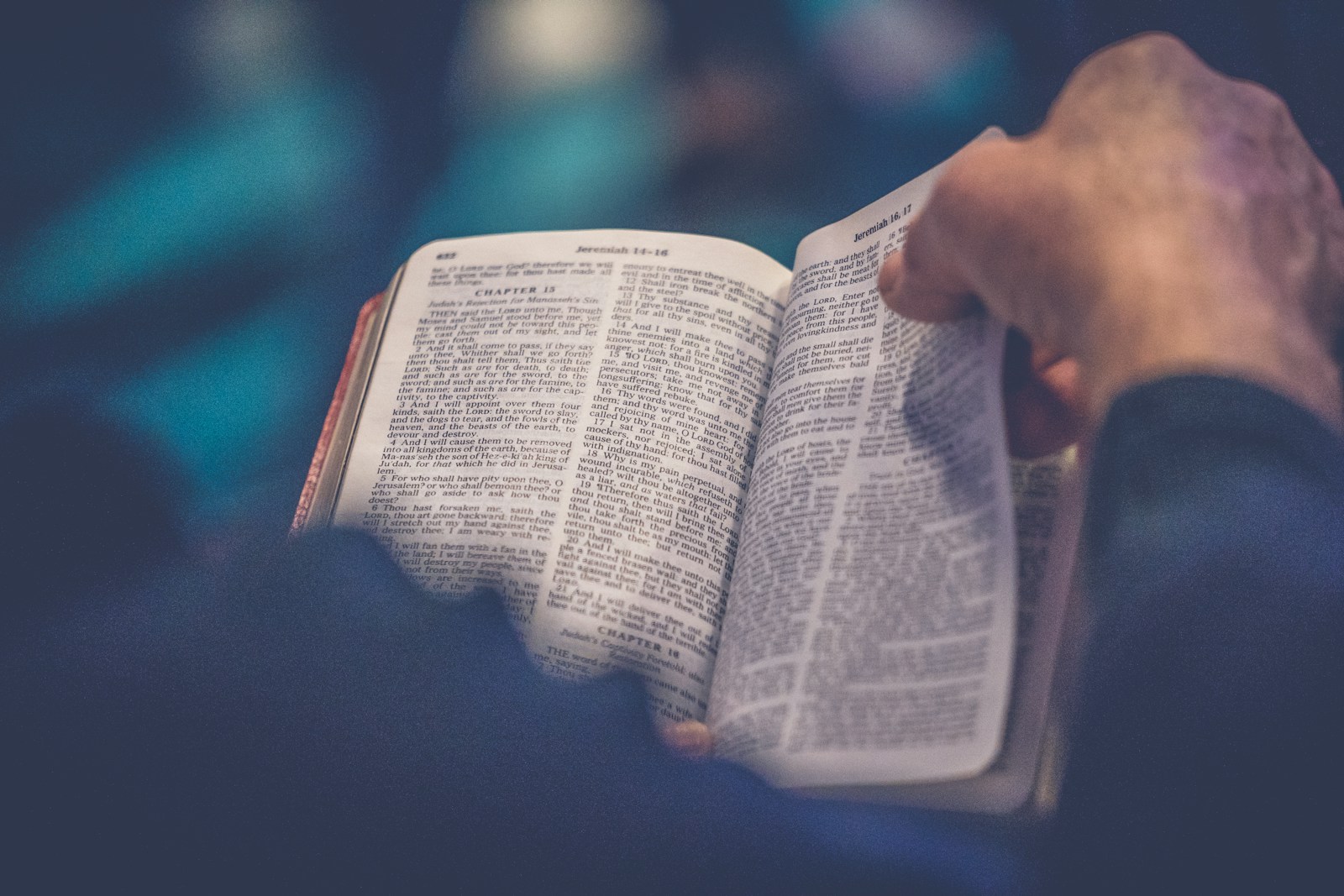
  • The Watchers, the Wilderness, and Christ’s Victory

    The Watchers, the Wilderness, and Christ’s Victory

    The Gospels present Jesus moving through a world in which spiritual conflict is not treated as a metaphor detached from history. In the wilderness, in synagogues, beside the Sea of Galilee, and at the foot of Mount Hermon, hostile spirits recognize him, fear his authority, and anticipate a judgment whose appointed time has not yet arrived. Jesus rebukes them and commands them, but he does not pause to deny that the spiritual order they inhabit is real.

    That observation raises a larger question: why does Jesus never correct the existence of the rebellious heavenly beings later associated with the Watchers? A careful answer must distinguish what Scripture states directly from interpretations drawn from its broader setting. The biblical texts consistently portray Jesus as confronting conscious spiritual powers subject to judgment. The connection between those powers and the Watchers tradition helps explain how many first-century Jewish readers may have understood passages about Noah, the abyss, and the last days.

    A Cry from the Tombs

    One of the clearest scenes appears in the accounts of the demon-possessed man living among the tombs in the Gentile region east of the Sea of Galilee. The man is isolated, violent toward himself, and impossible for the surrounding community to restrain. When Jesus arrives, the spirits speaking through him fall before Jesus and say, “What have you to do with me, Jesus, Son of the Most High God?”

    Their plea becomes even more revealing when they ask not to be sent into the abyss and, in Matthew’s account, ask whether Jesus has come to torment them “before the time.” The phrase assumes an appointed future judgment. These spirits do not speak as though the abyss or the final reckoning is imaginary; they fear that Jesus might bring the scheduled punishment forward.

    Jesus asks the spirit’s name and receives the answer “Legion,” a statement that many spirits occupy the man. He then orders them out. The episode does not provide a complete map of the unseen world, but it does show spirits acting as intelligent beings who know Jesus, recognize his authority, and understand that their freedom is temporary.

    Genesis 6 and the Watchers Tradition

    To understand the background of this worldview, readers in the time of Jesus would have looked to Genesis 6:1–4, where the “sons of God” take human women and the Nephilim appear before the flood. The short passage leaves many questions unanswered, but ancient Jewish interpreters developed it into a detailed account of heavenly beings who abandoned their proper place.

    The book commonly known as 1 Enoch calls these beings Watchers. In that tradition, a group of two hundred descends to Mount Hermon, binds itself by an oath, and takes human wives. Their transgression produces the giant offspring remembered as the Nephilim. The Watchers also teach forbidden knowledge, intensifying violence and corruption on the earth.

    1 Enoch was not part of the Hebrew Bible’s later canonical collection, yet it circulated widely in the Second Temple period. The New Testament letter of Jude directly quotes a prophecy attributed to Enoch, and the discovery of Enochic materials among the Dead Sea Scrolls confirms that these traditions were studied by serious Jewish communities near the time of Jesus. This does not make every detail of 1 Enoch biblical doctrine. It does show that the Watchers framework belonged to the religious environment in which Jesus’ words were heard.

    Noah, Corrupted Flesh, and the Last Days

    Jesus compares the time before his return with “the days of Noah.” The immediate point is that people will be absorbed in ordinary life and fail to recognize the coming judgment. Yet the reference also echoes the wider Genesis narrative, where violence and corruption fill the earth after the events associated with the sons of God and the Nephilim.

    Some ancient interpreters understood Noah’s description as more than a statement about private morality. They saw a corruption reaching into the created order itself. Genesis says that Noah was “blameless in his generations,” a phrase that has been read by some as emphasizing the integrity of his family line as well as his moral character. That interpretation should be held with humility, because the text is debated. Still, it explains why the flood was remembered not merely as punishment for individual wrongdoing but as an act that restrained a wider rebellion.

    When Jesus invokes Noah, he certainly warns against spiritual indifference. The broader scriptural setting also permits a deeper reading: the final crisis will expose again the rebellion of powers that oppose God’s created order. The warning is not an invitation to speculation, but a call to recognize that judgment belongs to God and that human beings should remain watchful.

    Caesarea Philippi and the Gates of Hades

    Jesus later leads his disciples to Caesarea Philippi, a city at the base of Mount Hermon near the sources of the Jordan. The location carried religious associations long before the Roman period. The area included shrines connected with pagan worship and a cavern popularly linked with the underworld. Against that setting, Peter confesses Jesus as the Christ, the Son of the living God.

    Jesus answers, “On this rock I will build my church, and the gates of Hades shall not prevail against it.” The traditional interpretation emphasizes the play between Peter’s name and the rock, as well as the confession of faith. That reading remains strong. The geography adds another possible layer: Jesus may be declaring, in the shadow of a site associated with the underworld, that the powers of death cannot withstand the advance of his kingdom.

    This does not require turning every geographical detail into a hidden code. It does show a recurring feature of Jesus’ ministry. He does not retreat from places associated with spiritual hostility. He enters them, announces God’s kingdom, and demonstrates that hostile powers recognize a superior authority.

    The Abyss, Tartarus, and the Bound Angels

    The language used by the spirits in the Gerasene account finds a close parallel in the apostolic writings. Second Peter says that God did not spare angels when they sinned but cast them into “Tartarus” and committed them to chains of gloomy darkness until judgment. Jude likewise speaks of angels who abandoned their proper dwelling and are kept in eternal chains under darkness for the judgment of the great day.

    These passages are frequently connected with the Watchers tradition because they describe heavenly beings who sinned, left their proper place, and await judgment. Whether every demon in the Gospels should be identified with the disembodied spirits of the Nephilim is an ancient interpretation rather than an explicit statement made by Jesus. What the New Testament does state plainly is that some spiritual beings rebelled, that some are already restrained, and that all remain answerable to God.

    Jesus’ silence about the existence of these beings therefore should not be treated as a standalone proof of every detail in later demonological systems. Silence can have several explanations. The spirits may have been seeking to negotiate, and Jesus’ purpose was not to teach them cosmology. Yet his actions are positive and unmistakable: he treats them as real, conscious, morally accountable beings under his command.

    The Cross as Public Triumph

    The New Testament presents the cross as the decisive turning point in this conflict. Peter writes that Christ, made alive in the spirit, proclaimed his victory to the spirits in prison, especially those connected with disobedience in the days of Noah. The passage has generated substantial debate, but it clearly links Christ’s death and resurrection with the judgment of rebellious spiritual powers.

    Paul uses the imagery of a Roman triumph when he says that God disarmed the rulers and authorities and put them to open shame, triumphing over them through the cross. What appeared to be the public defeat of a crucified man was, in apostolic interpretation, the public defeat of the powers opposed to God.

    This completes the pattern seen throughout the Gospels. The spirits at the tombs know that judgment is coming. The angels who sinned are held for judgment. Jesus enters territory associated with death and declares that its gates will not prevail. At the cross, the hostile powers are stripped of their claim to ultimate authority.

    What the Biblical Witness Requires

    The strongest conclusion is not that every proposed reconstruction of the Watchers is certain. Scripture leaves room for disagreement about the identity of the sons of God, the nature of the Nephilim, and the meaning of Christ’s proclamation to the imprisoned spirits. The strongest conclusion is that the biblical writers describe a real spiritual rebellion, real hostile powers, and a real judgment under the authority of Jesus Christ.

    Jesus did not need to deny the existence of the Watchers because his mission was not to win an argument about their reality. He came to confront and defeat the powers of darkness. The Gospels portray those powers recognizing him before many human observers do. They know who he is, they know that judgment is certain, and they know that their authority is limited.

    For believers, the practical question is not whether every ancient detail can be reconstructed. It is whether we recognize the authority of the one who overcame the powers that oppose God. The biblical answer is consistent: the church does not stand because darkness is harmless, but because Christ is victorious.

  • From Tolerance to Covenant: How the Bible Addresses Polygamy

    From Tolerance to Covenant: How the Bible Addresses Polygamy

    The Bible does not hide the complexity of polygamy. Its pages name men who had multiple wives, describe the households they formed, and preserve the emotional and political consequences that followed. These accounts are not simple endorsements. They are often portraits of rivalry, favoritism, grief, and divided loyalties.

    Reading these stories carefully raises an important question: if monogamous marriage is presented as the creation pattern, why did the biblical law regulate polygamy instead of banning it immediately? The answer becomes clearer when we distinguish between describing a practice, limiting its damage, and declaring it ideal.

    A world shaped by survival and social vulnerability

    Marriage in the ancient Near East was not organized primarily around modern ideas of romantic choice. It was also an economic, legal, and social institution. Families worked land together, formed alliances, protected territory, and cared for members who could not survive independently.

    War and disease regularly removed large numbers of men from communities. A widow without a father, husband, or adult son could be left with few means of support. In that setting, a household that took responsibility for another woman might provide food, protection, and a place in society. Customs such as levirate marriage likewise aimed to preserve a deceased man’s family line and protect his widow.

    These realities help explain why polygamy existed, but explanation is not the same as approval. A practice can arise from social pressures and still produce profound injustice. The biblical narratives repeatedly show that adding wives to a household did not remove human selfishness; it often gave jealousy and favoritism more room to operate.

    Mosaic law limited harm rather than celebrating the arrangement

    Exodus 21:10 addresses a man who takes another wife and requires him to continue providing the first wife with food, clothing, and marital rights. The rule is striking because it prevents the existing wife from being abandoned when another woman enters the household.

    The law does not describe multiple-wife marriage as a higher form of family life. It establishes a boundary around a practice that already existed. The vulnerable woman could not be deprived of basic necessities simply because her husband had taken someone else.

    Deuteronomy 21:15–17 addresses another danger: a husband’s favoritism toward one wife and her children. Even when one wife is loved and another is not, the firstborn son cannot lose his inheritance because of the father’s preference. Legal rights are protected even where affection is unequal.

    This distinction matters. Regulation can restrain cruelty without presenting the regulated behavior as the best expression of God’s intention. The law placed protections inside a flawed social structure; it did not erase the emotional pain that structure could create.

    Abraham, Sarah, and Hagar: when a solution creates a wound

    Abraham’s household illustrates the human cost vividly. After Sarah remained childless, she gave her Egyptian servant Hagar to Abraham so that a child could be born through her. The decision fit the customs of the time, but the result was not peaceful.

    Hagar’s pregnancy altered the relationship between the two women. Sarah felt dishonored, Hagar was treated harshly, and the household became a place of humiliation and insecurity. After Isaac was born, Sarah demanded that Hagar and Ishmael be sent away. Abraham’s family continued, but another mother and son were forced into the wilderness.

    The account does not present this as a harmonious solution to infertility. It shows how a socially accepted arrangement could generate rivalry and displacement. The people involved were real, vulnerable, and deeply affected by the structure they inhabited.

    Jacob’s divided household and the inheritance of rivalry

    Jacob’s family exposes the same pattern in another form. Jacob loved Rachel and worked seven years to marry her, but Laban deceived him and gave him Leah. Jacob later married Rachel as well, and both women gave their servants to him in the struggle to build a family.

    Leah’s names for her children read like a record of longing. She hoped each birth would finally secure her husband’s love, yet she remained conscious of being less cherished than Rachel. Rachel, meanwhile, experienced the anguish of barrenness and competed for children through her servant.

    The rivalry did not remain between the adults. The children grew up in a household marked by unequal affection and competing maternal loyalties. Joseph, Rachel’s favored son, was hated by his brothers and eventually sold into slavery. The wound created among the parents reached into the next generation.

    Hannah and Peninnah: pain in an ordinary home

    The story of Elkanah, Hannah, and Peninnah shows that these tensions were not limited to kings and patriarchs. Elkanah loved Hannah, but Hannah had no children while Peninnah had several. Peninnah used that difference to provoke and humiliate Hannah, especially during the family’s annual worship journeys.

    Hannah’s distress became so severe that she wept and could not eat. Her husband’s affection did not remove the social shame or the cruelty she faced from the other wife. In the temple, Hannah prayed silently with such intensity that Eli assumed she was drunk.

    The story eventually turns toward hope with the birth of Samuel, but its hopeful ending does not cancel the suffering that came before it. A kind husband could not make a competitive household emotionally safe by himself.

    David: a royal household divided by power

    David’s marriages were connected not only to personal relationships but also to political influence and security. In the ancient world, marriage could bind families, regions, and kingdoms together. Each alliance could strengthen a ruler’s position, yet it also expanded the number of mothers and sons connected to the royal succession.

    The consequences of this divided household became painfully visible in the conflict involving Amnon, Tamar, and Absalom. After Amnon assaulted Tamar, David was angry but failed to deliver justice. Absalom eventually arranged Amnon’s death and later rebelled against David. In the rebellion, Absalom publicly violated David’s concubines as a symbol of his seizure of royal authority.

    These events cannot be reduced to one cause, but the story reveals how a fractured household can magnify injustice and political instability. Private favoritism and unresolved family wounds eventually became a national crisis.

    Solomon ignored the warning attached to kingship

    Solomon’s household reached an extraordinary scale: 700 wives and 300 concubines, according to 1 Kings 11:3. Many marriages were political alliances, and from the standpoint of diplomacy they may have appeared useful. Yet Deuteronomy 17:17 had already warned Israel’s future king not to multiply wives, lest his heart turn away.

    The warning was not merely about household size. It concerned divided loyalty. The biblical account says that Solomon’s wives turned his heart toward other gods. The king who had built the temple in Jerusalem also built places of worship for foreign deities, including Ashtoreth and Molek.

    Solomon’s story joins spiritual compromise to family structure and political ambition. His wisdom did not protect him when he refused to live by the limits he had been given. After his death, the kingdom fractured under Rehoboam. The narrative presents that division as part of the long-term consequence of Solomon’s unfaithfulness.

    Jesus returned the discussion to creation

    Jesus addressed marriage in Matthew 19 when the Pharisees questioned him about divorce. Rather than treating the debate as a contest over technical permissions, he directed attention back to Genesis: “He who created them from the beginning made them male and female,” and “the two shall become one flesh.”

    Jesus’ emphasis was deliberate. He appealed to “the two,” not to a larger group, and grounded marriage in the creation account that came before the patriarchs, the monarchy, and the Mosaic legal system.

    When the Pharisees asked why Moses permitted divorce, Jesus answered that Moses allowed it because of the hardness of people’s hearts, but that it was not so from the beginning. His statement provides a framework for understanding other difficult permissions in the biblical record: a concession within a damaged society should not automatically be confused with the original ideal.

    Jesus did not merely add another regulation. He restored the conversation to the purpose of marriage: a covenant in which a man and a woman become one flesh. The movement is from the management of harm toward the recovery of a faithful, exclusive union.

    One covenant as a picture of faithful love

    The New Testament develops this vision further by presenting marriage as an image of Christ’s relationship with the church. Paul describes the husband’s love as self-giving, faithful, and sacrificial. The image is not of a divided affection shared among competing brides, but of a singular covenant marked by devotion.

    For that reason, the qualifications for church overseers in 1 Timothy 3:2 and Titus 1:6 include being “the husband of one wife.” This requirement reflects more than a social preference. It connects spiritual leadership with a household life that visibly expresses fidelity, integrity, and undivided commitment.

    What the biblical record is teaching

    The Bible’s treatment of polygamy is best understood as a combination of honest description, legal restraint, and eventual clarification of the creation ideal. Abraham, Jacob, Elkanah, David, and Solomon are not presented as proof that multiple-wife households produce flourishing. Their stories show the opposite: rivalry, neglect, humiliation, abuse, divided inheritance, spiritual compromise, and generational conflict.

    Mosaic law protected women and children from some of the worst consequences of favoritism. Jesus then directed his hearers beyond concession and back to the beginning. In doing so, he offered a principle for reading the difficult stories of the Old Testament: God’s patience with human hardness should not be mistaken for his endorsement of everything he temporarily regulated.

    The enduring pattern is covenant faithfulness. Marriage is portrayed as an exclusive union in which love is not divided among rivals and family members are not ranked according to a husband’s changing preference. The stories remain difficult, but they also make the point clearly: when people depart from that design, the damage rarely stays contained to one relationship. It spreads through the household and, eventually, into the generations that follow.

  • The Spiritual World Behind Paul’s Teaching on Evil

    The Spiritual World Behind Paul’s Teaching on Evil

    Paul’s letters describe evil in more than personal or psychological terms. He writes of “principalities,” “powers,” “the rulers of the darkness of this age,” and “spiritual forces of evil in the heavenly places.” Read carefully, this language presents an organized spiritual opposition rather than a picture of random disorder.

    That raises an important question: how did Paul speak about the unseen world with such confidence and precision? The answer is best approached through the Scriptures themselves, the Jewish intellectual world in which Paul was trained, and the traditions that shaped the first-century understanding of Genesis 6.

    A structured picture of spiritual conflict

    In Ephesians 6:12, Paul tells believers that their struggle is not against flesh and blood. His terms suggest different forms or levels of authority. “Principalities” and “powers” can be read as language for spiritual authorities; the “rulers of the darkness” points to influence expressed through the systems and values of an age; and the “spiritual forces of evil” describes the hostile reality behind the conflict.

    Paul is not encouraging Christians to become fascinated with speculative details. His purpose is practical: believers must recognize the nature of the struggle so that they can stand faithfully. The passage moves immediately toward the armor of God—truth, righteousness, readiness, faith, salvation, the word of God, and persevering prayer.

    Genesis 6 and the “sons of God”

    The background reaches back to Genesis 6, where the “sons of God” take human women and the Nephilim appear in the story before the flood. The identity of the “sons of God” has been debated for centuries. Some interpreters identify them with the line of Seth, while others understand the phrase as referring to heavenly beings.

    The second interpretation was widespread in ancient Jewish thought, including among many Jews of the first century. Related language in Job speaks of heavenly beings in God’s council, and this wider biblical vocabulary helps explain why early Jewish readers could understand Genesis 6 as a story involving a transgression of the boundary between the heavenly and human realms.

    Whatever conclusion one reaches about the passage, Genesis presents the episode as part of the corruption that preceded the flood. The Nephilim are associated with violence and renown, while divine judgment exposes the seriousness of rebellion against God’s order.

    Why 2 Peter and Jude matter

    Two brief New Testament passages supply details that are easy to miss. Second Peter 2:4 says that God did not spare angels who sinned but cast them into a place of punishment, where they are kept until judgment. The Greek verb used there is related to Tartarus, a term familiar in the Greco-Roman world for the deepest place of confinement.

    Jude 6 adds that certain angels did not keep their proper position but abandoned their dwelling. Jude’s wording emphasizes a departure from the sphere or condition assigned to them. The point is not to endorse every feature of ancient mythology. Rather, the writers use language their audience understood to describe a category of rebellious spiritual beings already held for judgment.

    This distinction is important. The New Testament does not portray every hostile spiritual power as imprisoned in the same place. Some beings are described as awaiting judgment in confinement, while other powers are depicted as active in the present spiritual conflict.

    The Book of Enoch as historical background

    The Book of Enoch helps explain the conceptual world behind these passages. It was widely known in ancient Jewish circles and develops the story of the rebellious heavenly beings, their transgression, and the punishment that followed. Jude also contains a quotation associated with Enochic tradition, showing that material from this tradition was known to early Christian readers.

    That historical importance should not be confused with canonical authority. The Book of Enoch is part of the canon of the Ethiopian Orthodox Church, but most Christian traditions do not treat it as Scripture. It should not be used to establish the gospel, redefine salvation, or override the writings recognized as inspired by a particular Christian community.

    Used carefully, however, it can illuminate the vocabulary and assumptions of the period. Paul, Peter, and Jude did not write in an intellectual vacuum. They communicated within a living Jewish world that discussed Genesis, angels, judgment, heavenly realms, and the origin of evil.

    From imprisoned angels to wandering demons

    Ancient Jewish tradition also developed an explanation for the spirits associated with the Nephilim. In that tradition, the bodies of the giants were destroyed in the flood, while their spirits remained as restless beings without a proper place. This became one explanation for the demons encountered in later religious literature and in the Gospel accounts.

    This background can help readers understand why the demons in the Gospels fear being sent into the abyss and seek another place to inhabit. It remains important to distinguish the tradition from the canonical text itself. The Gospels present the authority of Jesus over demons clearly, but they do not require every later explanation of their origin.

    Paul’s education and experience

    Paul’s knowledge of these themes can be understood first through his education. He was trained within the Jewish interpretation of Scripture and studied under Gamaliel, a respected teacher of the law. He knew the language of Genesis and the traditions circulating among Jews of his time.

    Paul also describes an extraordinary personal experience in 2 Corinthians 12, where he speaks of being caught up to the third heaven and hearing things he was not permitted to repeat. He does not turn that experience into a catalogue of secret knowledge. In fact, his restraint is part of the lesson. Spiritual experience is never presented as a license for pride or speculation.

    His teaching therefore rests on more than one foundation: careful engagement with Scripture, awareness of the Jewish traditions surrounding Scripture, and personal experience interpreted through humility and the lordship of Christ.

    The authority of Christ over every power

    Paul’s purpose is not to make believers afraid of an invisible hierarchy. His central message is that no spiritual power can separate God’s people from the love of God in Christ. Romans 8 places angels, powers, the present, the future, height, depth, and every created thing beneath the certainty of God’s saving love.

    The cross also has cosmic significance in Paul’s theology. Christ’s death and resurrection are not merely private encouragement for individual believers. They announce the defeat of the powers and the reconciliation of creation under God’s rule. The spiritual conflict is real, but it is not an evenly matched contest between two ultimate forces.

    Why the armor of God is practical

    Because the conflict is described as organized and persistent, Paul calls Christians to adopt a deliberate way of life. Truth protects against deception. Righteousness guards the heart. The gospel of peace gives stability and direction. Faith extinguishes accusations and fear. Salvation protects the mind, while the word of God gives believers a faithful answer to temptation and falsehood.

    Paul then emphasizes prayer: prayer on every occasion, with perseverance and concern for all the saints. The answer to spiritual danger is not obsession with hidden powers. It is steadfast trust, obedience, community, discernment, and dependence on God.

    A contrast between angels and humanity

    Hebrews 2:16 states that God helps the descendants of Abraham rather than angels. Within the biblical argument, this highlights the distinctive mercy shown to humanity through Christ. The New Testament does not describe a redemption plan for rebellious angels, but it repeatedly proclaims rescue for human beings who turn to God.

    This contrast should produce gratitude rather than speculation. The important question is not whether a person can map every rank of the unseen world. It is whether that person has received the grace offered in Christ and is learning to live faithfully within it.

    Reading Paul with balance

    Paul knew the language of spiritual conflict because he was deeply formed by Scripture, the traditions of his people, and his own life in Christ. The Book of Enoch and related writings can help modern readers understand the historical background of passages in Ephesians, 2 Peter, and Jude, but they do not replace the Bible’s central witness.

    The lasting message is clear. Evil is neither imaginary nor ultimate. Spiritual powers may oppose God’s purposes, yet they remain created and subject to judgment. Christ’s victory is decisive, and believers are called to stand in that victory with truth, holiness, faith, Scripture, and prayer.