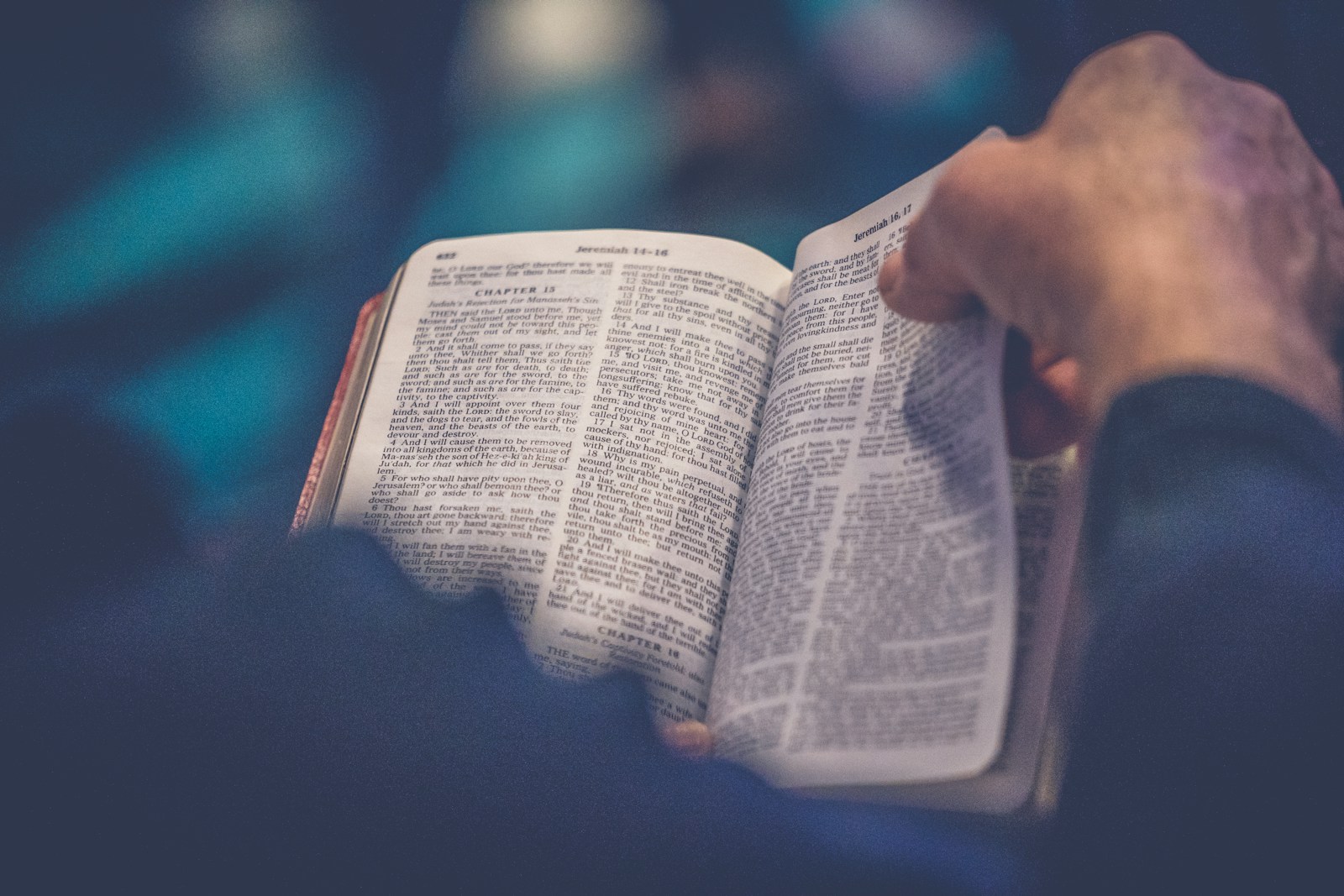
The Bible does not hide the complexity of polygamy. Its pages name men who had multiple wives, describe the households they formed, and preserve the emotional and political consequences that followed. These accounts are not simple endorsements. They are often portraits of rivalry, favoritism, grief, and divided loyalties.
Reading these stories carefully raises an important question: if monogamous marriage is presented as the creation pattern, why did the biblical law regulate polygamy instead of banning it immediately? The answer becomes clearer when we distinguish between describing a practice, limiting its damage, and declaring it ideal.
A world shaped by survival and social vulnerability
Marriage in the ancient Near East was not organized primarily around modern ideas of romantic choice. It was also an economic, legal, and social institution. Families worked land together, formed alliances, protected territory, and cared for members who could not survive independently.
War and disease regularly removed large numbers of men from communities. A widow without a father, husband, or adult son could be left with few means of support. In that setting, a household that took responsibility for another woman might provide food, protection, and a place in society. Customs such as levirate marriage likewise aimed to preserve a deceased man’s family line and protect his widow.
These realities help explain why polygamy existed, but explanation is not the same as approval. A practice can arise from social pressures and still produce profound injustice. The biblical narratives repeatedly show that adding wives to a household did not remove human selfishness; it often gave jealousy and favoritism more room to operate.
Mosaic law limited harm rather than celebrating the arrangement
Exodus 21:10 addresses a man who takes another wife and requires him to continue providing the first wife with food, clothing, and marital rights. The rule is striking because it prevents the existing wife from being abandoned when another woman enters the household.
The law does not describe multiple-wife marriage as a higher form of family life. It establishes a boundary around a practice that already existed. The vulnerable woman could not be deprived of basic necessities simply because her husband had taken someone else.
Deuteronomy 21:15–17 addresses another danger: a husband’s favoritism toward one wife and her children. Even when one wife is loved and another is not, the firstborn son cannot lose his inheritance because of the father’s preference. Legal rights are protected even where affection is unequal.
This distinction matters. Regulation can restrain cruelty without presenting the regulated behavior as the best expression of God’s intention. The law placed protections inside a flawed social structure; it did not erase the emotional pain that structure could create.
Abraham, Sarah, and Hagar: when a solution creates a wound
Abraham’s household illustrates the human cost vividly. After Sarah remained childless, she gave her Egyptian servant Hagar to Abraham so that a child could be born through her. The decision fit the customs of the time, but the result was not peaceful.
Hagar’s pregnancy altered the relationship between the two women. Sarah felt dishonored, Hagar was treated harshly, and the household became a place of humiliation and insecurity. After Isaac was born, Sarah demanded that Hagar and Ishmael be sent away. Abraham’s family continued, but another mother and son were forced into the wilderness.
The account does not present this as a harmonious solution to infertility. It shows how a socially accepted arrangement could generate rivalry and displacement. The people involved were real, vulnerable, and deeply affected by the structure they inhabited.
Jacob’s divided household and the inheritance of rivalry
Jacob’s family exposes the same pattern in another form. Jacob loved Rachel and worked seven years to marry her, but Laban deceived him and gave him Leah. Jacob later married Rachel as well, and both women gave their servants to him in the struggle to build a family.
Leah’s names for her children read like a record of longing. She hoped each birth would finally secure her husband’s love, yet she remained conscious of being less cherished than Rachel. Rachel, meanwhile, experienced the anguish of barrenness and competed for children through her servant.
The rivalry did not remain between the adults. The children grew up in a household marked by unequal affection and competing maternal loyalties. Joseph, Rachel’s favored son, was hated by his brothers and eventually sold into slavery. The wound created among the parents reached into the next generation.
Hannah and Peninnah: pain in an ordinary home
The story of Elkanah, Hannah, and Peninnah shows that these tensions were not limited to kings and patriarchs. Elkanah loved Hannah, but Hannah had no children while Peninnah had several. Peninnah used that difference to provoke and humiliate Hannah, especially during the family’s annual worship journeys.
Hannah’s distress became so severe that she wept and could not eat. Her husband’s affection did not remove the social shame or the cruelty she faced from the other wife. In the temple, Hannah prayed silently with such intensity that Eli assumed she was drunk.
The story eventually turns toward hope with the birth of Samuel, but its hopeful ending does not cancel the suffering that came before it. A kind husband could not make a competitive household emotionally safe by himself.
David: a royal household divided by power
David’s marriages were connected not only to personal relationships but also to political influence and security. In the ancient world, marriage could bind families, regions, and kingdoms together. Each alliance could strengthen a ruler’s position, yet it also expanded the number of mothers and sons connected to the royal succession.
The consequences of this divided household became painfully visible in the conflict involving Amnon, Tamar, and Absalom. After Amnon assaulted Tamar, David was angry but failed to deliver justice. Absalom eventually arranged Amnon’s death and later rebelled against David. In the rebellion, Absalom publicly violated David’s concubines as a symbol of his seizure of royal authority.
These events cannot be reduced to one cause, but the story reveals how a fractured household can magnify injustice and political instability. Private favoritism and unresolved family wounds eventually became a national crisis.
Solomon ignored the warning attached to kingship
Solomon’s household reached an extraordinary scale: 700 wives and 300 concubines, according to 1 Kings 11:3. Many marriages were political alliances, and from the standpoint of diplomacy they may have appeared useful. Yet Deuteronomy 17:17 had already warned Israel’s future king not to multiply wives, lest his heart turn away.
The warning was not merely about household size. It concerned divided loyalty. The biblical account says that Solomon’s wives turned his heart toward other gods. The king who had built the temple in Jerusalem also built places of worship for foreign deities, including Ashtoreth and Molek.
Solomon’s story joins spiritual compromise to family structure and political ambition. His wisdom did not protect him when he refused to live by the limits he had been given. After his death, the kingdom fractured under Rehoboam. The narrative presents that division as part of the long-term consequence of Solomon’s unfaithfulness.
Jesus returned the discussion to creation
Jesus addressed marriage in Matthew 19 when the Pharisees questioned him about divorce. Rather than treating the debate as a contest over technical permissions, he directed attention back to Genesis: “He who created them from the beginning made them male and female,” and “the two shall become one flesh.”
Jesus’ emphasis was deliberate. He appealed to “the two,” not to a larger group, and grounded marriage in the creation account that came before the patriarchs, the monarchy, and the Mosaic legal system.
When the Pharisees asked why Moses permitted divorce, Jesus answered that Moses allowed it because of the hardness of people’s hearts, but that it was not so from the beginning. His statement provides a framework for understanding other difficult permissions in the biblical record: a concession within a damaged society should not automatically be confused with the original ideal.
Jesus did not merely add another regulation. He restored the conversation to the purpose of marriage: a covenant in which a man and a woman become one flesh. The movement is from the management of harm toward the recovery of a faithful, exclusive union.
One covenant as a picture of faithful love
The New Testament develops this vision further by presenting marriage as an image of Christ’s relationship with the church. Paul describes the husband’s love as self-giving, faithful, and sacrificial. The image is not of a divided affection shared among competing brides, but of a singular covenant marked by devotion.
For that reason, the qualifications for church overseers in 1 Timothy 3:2 and Titus 1:6 include being “the husband of one wife.” This requirement reflects more than a social preference. It connects spiritual leadership with a household life that visibly expresses fidelity, integrity, and undivided commitment.
What the biblical record is teaching
The Bible’s treatment of polygamy is best understood as a combination of honest description, legal restraint, and eventual clarification of the creation ideal. Abraham, Jacob, Elkanah, David, and Solomon are not presented as proof that multiple-wife households produce flourishing. Their stories show the opposite: rivalry, neglect, humiliation, abuse, divided inheritance, spiritual compromise, and generational conflict.
Mosaic law protected women and children from some of the worst consequences of favoritism. Jesus then directed his hearers beyond concession and back to the beginning. In doing so, he offered a principle for reading the difficult stories of the Old Testament: God’s patience with human hardness should not be mistaken for his endorsement of everything he temporarily regulated.
The enduring pattern is covenant faithfulness. Marriage is portrayed as an exclusive union in which love is not divided among rivals and family members are not ranked according to a husband’s changing preference. The stories remain difficult, but they also make the point clearly: when people depart from that design, the damage rarely stays contained to one relationship. It spreads through the household and, eventually, into the generations that follow.